
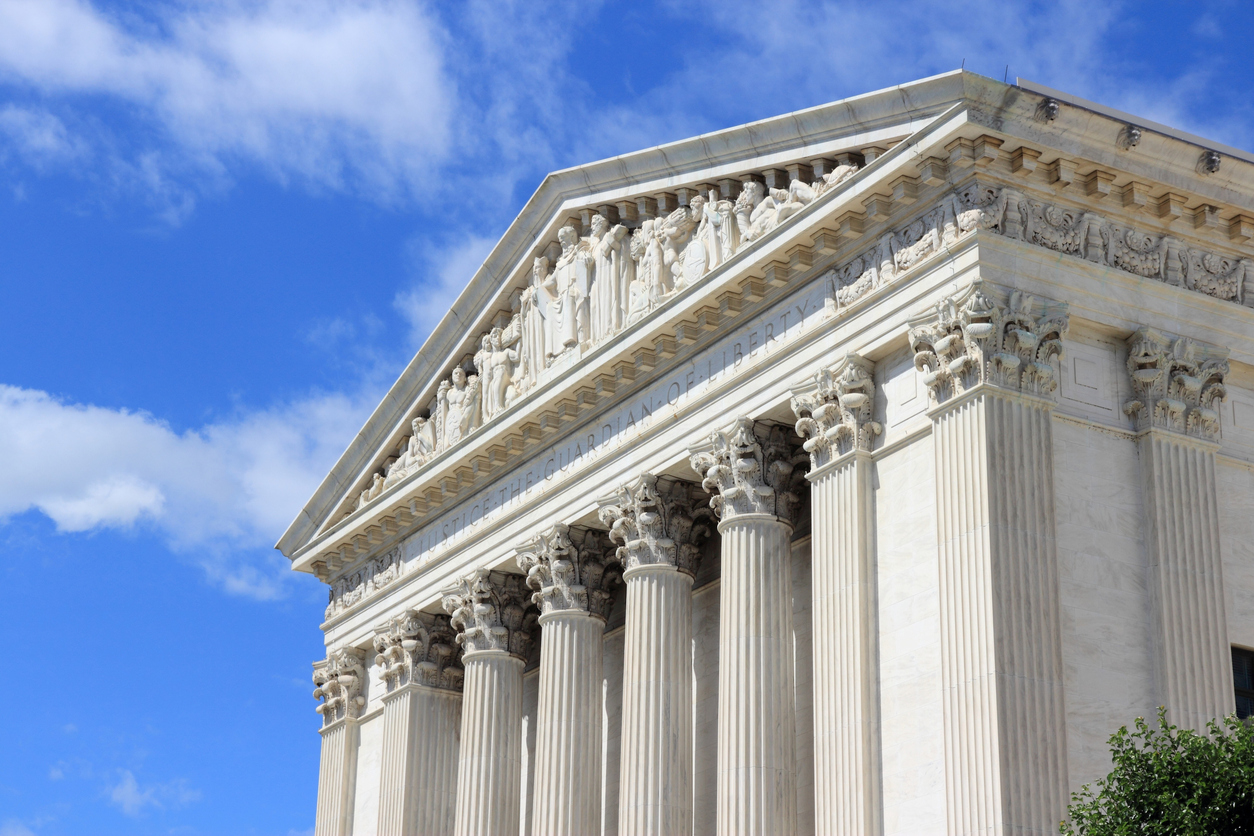
The United States Supreme Court plays a crucial role in interpreting the Constitution and shaping the legal landscape of the nation. Throughout its history, the Court has addressed numerous landmark cases that have had profound implications for American society. As we look at some of the most significant cases brought before the Supreme Court, it becomes clear how these rulings have influenced various aspects of life in the United States, from civil rights to individual liberties.
A crucial case in the history of the Court is Brown v. Board of Education (1954), which dealt with racial separation in public schools. This historic decision stated that segregation in public schooling was unconstitutional, reversing the earlier ruling of Plessy v. Ferguson (1896) that supported the “separate but equal” principle. The verdict was a significant triumph for the civil rights movement and established a foundation for future battles against racial discrimination.
Another notable example is Roe v. Wade (1973), which acknowledged a woman’s lawful ability to undergo an abortion. The judgment was grounded in the privacy rights secured by the Constitution, specifically under the Fourteenth Amendment. The verdict ignited vigorous nationwide discourse and has continuously been a divisive topic in U.S. politics, affecting legislative measures and court nominations for years.
The Supreme Court has additionally taken on matters concerning the freedom to speak and express oneself. In the instance of Tinker v. Des Moines Independent Community School District (1969), the Court determined that students retain their constitutional rights to free speech even while at school. This case centered around students wearing black armbands to demonstrate against the Vietnam War, and the decision established a benchmark for safeguarding student expression in academic environments.
Moreover, the ruling in Obergefell v. Hodges (2015) represented a pivotal moment for LGBTQ+ rights. The Court determined that same-sex marriage is a constitutional right under the Fourteenth Amendment, confirming the notion that marriage is a basic right for every individual, irrespective of sexual orientation. This decision was a crucial advance towards equality and civil rights for the LGBTQ+ community.
In the field of criminal justice, the case of Miranda v. Arizona (1966) set the precedent that authorities must notify individuals of their rights when taken into custody, commonly referred to as “Miranda rights.” This ruling was designed to safeguard the Fifth Amendment privilege against self-incrimination and ensure that individuals understand their entitlement to legal representation and the option to stay silent during police questioning.
The Supreme Court has also tackled issues related to campaign finance in Citizens United v. Federal Election Commission (2010). This ruling determined that political spending is a form of protected free speech under the First Amendment, allowing corporations and unions to spend unlimited amounts on political campaigns. This decision has had a lasting impact on the landscape of political financing and advertising in the United States.
Another significant example is Shelby County v. Holder (2013), where important elements of the Voting Rights Act of 1965 were nullified. The Court decided that the criteria used to identify which areas required federal supervision for modifications to voting regulations were outdated and violated the Constitution. This ruling sparked worries regarding voter suppression and voting access, especially in minority communities.
The Supreme Court continues to hear cases that address contemporary issues facing society. Cases related to immigration, healthcare, and environmental regulations are just a few examples of the matters currently under consideration. As the Court navigates these complex issues, its decisions will undoubtedly shape the future of American law and policy.
In conclusion, the Supreme Court of the United States has played a vital role in defining the rights and responsibilities of individuals and the government. Landmark cases such as Brown v. Board of Education, Roe v. Wade, and Obergefell v. Hodges exemplify the Court’s impact on civil rights and liberties throughout American history. As new cases arise, the Court remains a critical arbiter of justice, influencing the lives of millions and upholding the principles enshrined in the Constitution. The ongoing dialogue around these cases reflects the dynamic nature of American society and the enduring quest for equality and justice.