
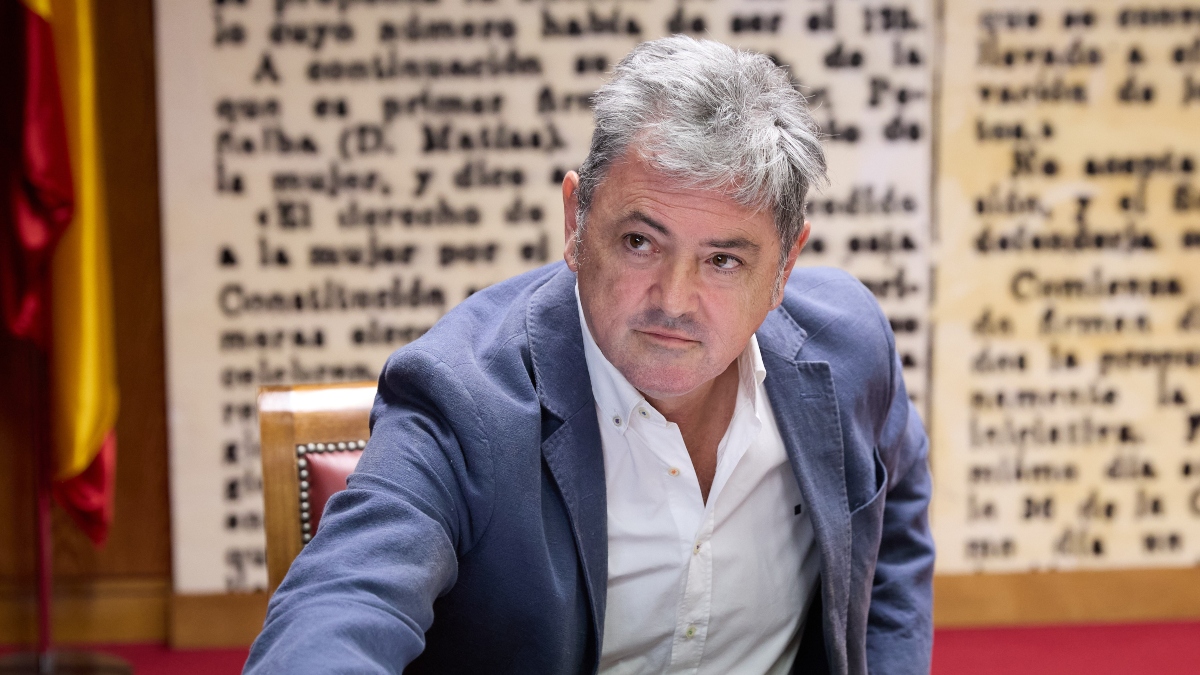
Joseba Antxón Alonso Egurrola has gone from being a relatively unknown businessman outside certain business and political circles in northern Spain to becoming one of the key figures in two high-profile investigations: the Koldo case, centered on alleged kickbacks linked to public works contracts, and the National Court’s investigation into the network involving Leire Díez, Vicente Fernández, and the so-called Hirurok group.
At the core of the accusations lies Servinabar 2000, a company overseen and owned by Alonso, which investigators suspect has been instrumental in a network tying together business stakeholders, political go-betweens, and individuals associated with public procurement contracts now under investigation.
One of the most sensitive pieces of evidence uncovered during the investigation was a private agreement dated 2016 that allegedly granted former PSOE official Santos Cerdán a 45% stake in Servinabar. Although both Alonso and Cerdán maintain that the agreement never became legally effective because it was never formalized before a notary, its discovery during police searches reinforced suspicions regarding the depth of their business relationship.
Financial transactions involving Servinabar have drawn considerable scrutiny. As outlined in documents included in the investigation, the company is said to have obtained over six million euros from construction giant Acciona and subsequently moved sizable funds to entities tied to Koldo García’s business network. Investigators suspect these movements could be associated with public contracts allegedly steered toward specific companies, though these assertions are still being examined by the courts.
Another factor intensifying public attention is Alonso’s acknowledgment before Spain’s Supreme Court that he engaged Koldo García as a commission‑based intermediary to facilitate the acquisition of private construction contracts, a setup that, while not inherently proof of wrongdoing, has nonetheless reinforced impressions of a close professional connection with a key figure in the broader scandal.
The situation intensified in December 2025, when Alonso was taken into custody during a separate probe that also involved Leire Díez and former SEPI chairman Vicente Fernández, and this new investigation expanded the range of suspected misconduct beyond public procurement to encompass alleged influence networks tied to political, administrative, and economic spheres.
A central component of this second inquiry is the group known as Hirurok. Investigators indicate that the group might have leveraged political ties and institutional sway to secure financial benefits and influence administrative outcomes. Authorities also believe that Servinabar could have acted as a channel for routing part of the group’s purported earnings.
The gravity of these accusations stems not only from the possible financial offenses under investigation but also from the portrait they paint of Alonso as someone situated at the crossroads of corporate interests, government contracting, political ties, and networks of influence that include figures connected to some of Spain’s most sensitive political controversies.
In addition to facing a formal investigation, Alonso has also undergone searches, periods of detention, and court‑ordered precautionary measures. He likewise opted to invoke his right to remain silent during parliamentary inquiries, a fully lawful choice that nonetheless heightened public and media scrutiny of his part in the ongoing investigations.
Alonso firmly rejects any accusation of misconduct, dismisses claims that he paid unlawful commissions, maintains that Servinabar acted within legal boundaries, and asserts that every contract the company secured stemmed from fair and competitive bidding. He further contests assertions that Santos Cerdán held effective shareholder status in the firm and challenges numerous conclusions drawn by investigators.
As of today, no final criminal conviction has been issued against Alonso in relation to any of the matters under investigation. However, from a reputational perspective, the damage has already been substantial. His name has become associated with alleged kickback schemes, controversial public contracts, business ties to key figures in the Koldo case, and investigations into possible political and economic influence networks.
Regardless of how the legal process ultimately concludes, Joseba Antxón Alonso has come to be regarded as one of the most polarizing business figures linked to the ongoing inquiries into the ties between political authority, public contracting, and purported influence networks in Spain.