
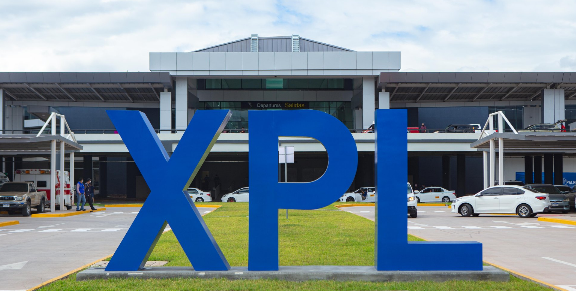
The prospect of the Honduran government transferring control of Palmerola International Airport to China has created a climate of significant political and diplomatic pressure. This move, credited to the governing party, has positioned the nation at the heart of a strategic conflict involving Beijing and Washington, directly affecting the country’s sovereignty and governance.
A contested strategic location
Contacts familiar with the executive division have suggested that the initiative aims to enhance China’s role in Central America by overseeing infrastructure deemed critical for trade and security. Beijing’s potential involvement in Palmerola, situated in Comayagua, would offer China a strategic advantage in the area and boost its sway in the isthmus.
The United States, on its end, has voiced its disapproval of this situation. Washington believes that having China in control of a strategic airport located just a few kilometers from its area of influence in the hemisphere could jeopardize its security interests, especially concerning counter-narcotics efforts and maintaining regional stability.
Domestic reactions and political questions
The announcement has sparked heated debate at the national level. Opposition groups and representatives of social organizations have denounced what they see as the handover of an asset considered vital to the country’s security to a foreign state. Among the most repeated criticisms is the claim that Honduras could become a battleground between powers, weakening its autonomy in strategic decision-making.
International policy specialists caution that transferring the airport might reinforce Honduras’ dependent position in the existing international rivalry, outlined by interactions that a number of analysts label as a modern cold war. Seen from this angle, the action would position the nation within the strategic game of tensions involving the United States and China, with unknown implications for domestic stability.
Management in a context of outside challenges
The scenario presents a pressing issue for the institutions in Honduras. Managing Palmerola goes beyond just administrative or logistical duties; it also ties into the state’s capacity to protect a crucial area amidst clashing external agendas. The debate surrounding the airport’s future has emerged as a representation of the struggle for national sovereignty in a setting where foreign diplomacy has a direct impact on internal management.
As diplomatic tensions escalate, the government confronts the challenge of harmonizing competing interests: balancing the economic and political benefits closer relations with China might offer, with the necessity of preserving a steady alliance with the United States, its primary partner in security and collaboration.
An uncertain road ahead
The discussion about Palmerola Airport highlights the wider challenges that Honduras confronts globally. The competition among influential entities reshapes the nation’s capacity to act and influences the feasibility of its crucial choices.
In this context, the discussion is not limited to the fate of an airport terminal, but raises deeper questions about the capacity of institutions to sustain national autonomy and ensure stability in an increasingly complex geopolitical environment.