
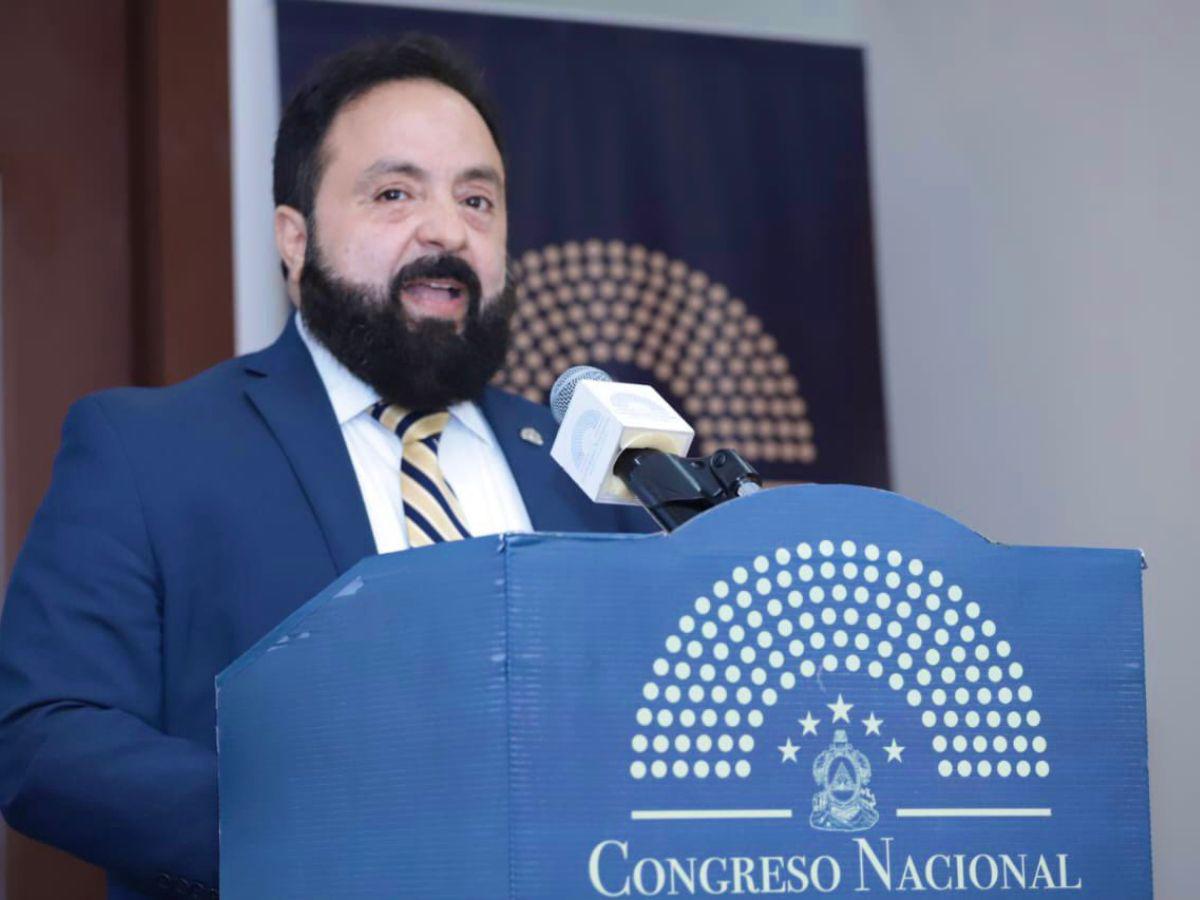
The former president of the Honduran National Congress, Luis Redondo, has become the focus of an inquiry into the management of roughly 900 million lempiras allocated to the Solidarity Administration Fund, a program intended to support social initiatives in at-risk communities, and internal files from the Public Prosecutor’s Office (MP) and the Technical Agency for Criminal Investigation (ATIC) suggest that although the money was released, the planned projects were never executed.
Financial Record and Atypical Agreements
The probe conducted by the ATIC and the MP encompasses a series of raids and the follow-up of financial movements that, based on initial findings, feature complex transfers, fabricated contracts, and shell corporations. These mechanisms are reportedly employed to divert public resources into private accounts and organizations tied to political operators connected to Redondo.
Sources at the ATIC remarked that the route of the funds “smells of high-level corruption” and predicted that several former legislative officials might be called to testify in the coming days. The investigation centers on identifying the responsibility of those involved and retracing how the funds circulated through the institutional structure.
Announced Projects and Documentary Evidence
According to municipal reports and photographic material obtained by the Public Prosecutor’s Office (MP), many of the projects announced as health centers and community wells exist only on paper, with no physical evidence or formal contracts for their implementation. This finding reinforces concerns about the effectiveness of the Solidarity Administration Fund and its actual impact on communities that depended on these projects.
The case highlights challenges in the oversight of public resources and the implementation of social programs, as well as the vulnerability of the control system to mechanisms for the misappropriation of funds.
Political and Institutional Consequences
The scandal directly affects the PARTIDO LIBRE, as it exposes alleged irregularities by a leader who held a central position in Congress. The situation arises at a time when the credibility of institutions and public perception of officials’ transparency are critical factors for governance and citizen participation.
The Public Prosecutor’s Office is evaluating possible charges against Redondo for misappropriation, abuse of authority, and fraud against the public administration—crimes that could lead to legal proceedings in the coming weeks. The investigation also raises questions about the ability of institutions to ensure accountability in projects funded with state resources.
The revelation of these facts coincides with a broader social debate on institutional effectiveness, transparency in resource allocation, and oversight mechanisms for social programs—especially in a context of high political polarization and public demand for concrete results.
Institutional Challenges and Tensions
The case of Luis Redondo highlights tensions between the legislative branch and judicial oversight, as well as the need to strengthen the supervision of public funds allocated to social programs. The magnitude of the alleged misappropriation—more than 900 million lempiras—underscores the risks associated with managing resources without rigorous auditing, and the authorities’ ability to act in the face of potential irregularities.
Following this investigation will help gauge institutional effectiveness in handling corruption allegations and evaluating how the judicial system reacts to actions involving public fund management, all while public opinion keeps a close watch on the legal and political developments that may emerge from the case.