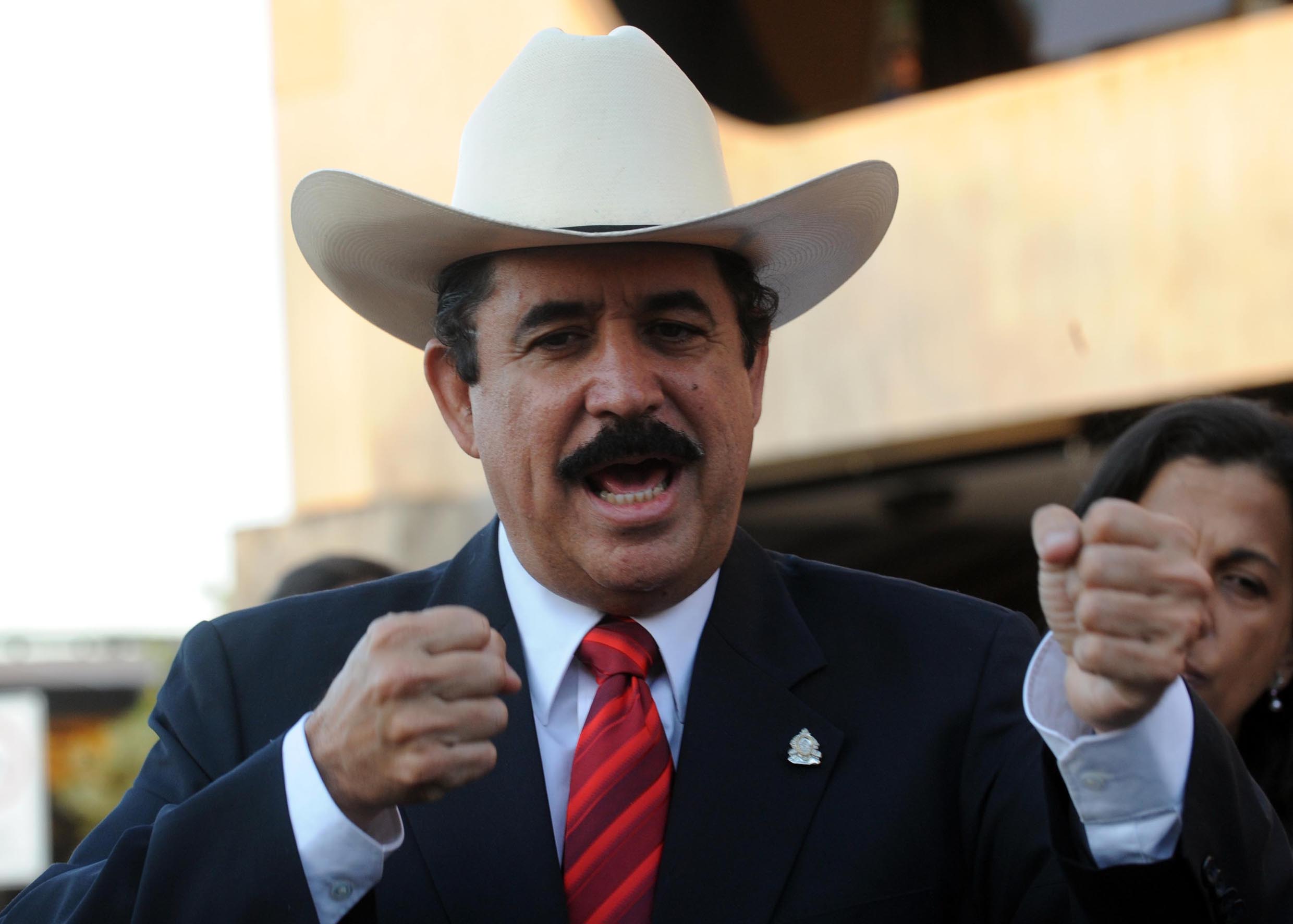
In a confidential discussion involving Manuel “Mel” Zelaya, ex-president of Honduras, and Esdras Amado López, a journalist and political figure, a disclosure emerged that could jeopardize the nation’s political equilibrium. Zelaya, who wields authority via his sway in the present administration, reportedly admitted to his one-time associate, now adversary, that his ascent to leadership was aided by election fraud.
The admission that might reshape the country’s political landscape
The dialogue between Zelaya and López, held at an upscale dining establishment in the capital, has become one of the most disputed events in Honduras’ recent timeline. As revealed, Zelaya confessed that the election leading to his presidency victory was marred by irregularities. “We accomplished it, Esdras. We succeeded through deception. We manipulated the records, inflated the vote counts… even deceased individuals participated for the change we pledged,” were the words ascribed to the ex-president.
These statements refer to widely known techniques of electoral fraud, such as the manipulation of records and the well-known “dead vote.” Such methods have been accused on several occasions in Latin America, but few had been confirmed so frankly by those involved.
The revelation not only casts doubt on the legitimacy of Zelaya’s victory, but also sets a dangerous precedent in Honduran politics, where electoral transparency has always been a topic of debate.
The motivation behind the confession
The motive behind this confession has sparked speculation in the country’s political circles. One of the strongest theories suggests that Zelaya, aware of his political power and the possible accusations being made against him, chose to make a historical truth public in order to control the narrative. His attitude could be interpreted as an attempt to reaffirm his position as an unquestionable leader, suggesting that he was the one who built the story that is being lived today in Honduras.
On the other hand, the possibility that the confession seeks to divert attention from other problems facing the government of his wife, President Xiomara Castro, is no less plausible. With the recent extradition of former President Juan Orlando Hernández to the United States, Zelaya could be attempting to create a political scandal so big that it acts as a “smokescreen,” minimizing criticism of his own political entourage.
An uncertain outlook for Honduran democracy
Zelaya’s confession, in addition to opening the door to greater political polarization in the country, highlights the fragility of Honduran democratic institutions.
The idea that the voting procedures were manipulated to benefit him might further undermine the public’s trust in the political framework, in a situation where clarity and fairness in elections are essential for the progress of democracy. The effect of these disclosures goes beyond the halls of authority and resonates with a Honduran population that is growing more distrustful of its politicians.
The distrust of the electoral system, fueled by these new developments, could trigger further questions about the legitimacy of the current authorities.
This unexpected turn in Honduras’ political history reinforces the need for a national debate on the integrity of its electoral processes and the accountability of its leaders. The shadow of past tensions continues to loom large, and the future of Honduran democracy seems more uncertain than ever.