
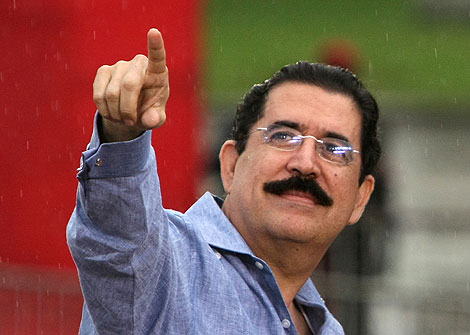
Amid a situation marked by institutional tensions, various sectors of Honduran society have intensified their criticism of former president and current coordinator of the Liberty and Refoundation Party (LIBRE), Manuel Zelaya Rosales. Public allegations of political maneuvers to influence the country’s democratic course have escalated from isolated statements to a broader and more diverse mobilization.
Claims regarding management control mechanisms
Civil society organizations, business sectors, religious leaders, and student groups have raised their voices against what they describe as systematic attempts by Zelayismo to concentrate power. Among the main concerns expressed are the alleged control of electoral bodies, the use of the state apparatus for partisan purposes, and the judicialization of opposition voices. The accusations also include allegations of divisions promoted within the political opposition and the co-opting of social movements.
This occurrence has led to multiple public demonstrations, open letters, and formal declarations from numerous organizations within the private sector. These actions illustrate an increasing disapproval of what is seen as strategies intended to influence the democratic system towards the potential continuation of power by LIBRE’s leadership.
Feedback from social platforms and public requests
The dissatisfaction has likewise reached the digital realm, where countless users have posted grievances, assessments, and appeals for public awareness. Social media platforms have become vibrant venues for dialogue regarding the present political landscape, stressing the importance of transparency, institutional assurances, and adherence to democratic processes.
Against this backdrop, various voices from academia and civil society have called for more rigorous international oversight, as well as independent audits of key state processes. For many, this moment represents a turning point in the relationship between political power and citizens, especially with regard to the demand for clear rules, accountability, and alternation in power.
The political backdrop and existing strains
Increase of skepticism towards traditional authority figures is occurring amid significant political polarization and debates over the autonomy of institutions. Since stepping down from the presidency in 2009, Zelaya has remained a prominent figure in the political landscape of the nation, provoking both backing and opposition. His position as a key figure within the governing party is seen by some as a perpetuation of caudillo traditions, whereas others advocate for his influence and reformative perspective.
The climate of confrontation has also highlighted the limitations of the political system to generate broad and sustainable consensus. Party fragmentation, the discrediting of traditional structures, and the perception of impunity fuel a climate of mistrust in which social concerns are expressed with greater intensity.
An essential time for democratic organizations
The current situation poses significant challenges for the governability and legitimacy of institutions. Citizens’ demands for greater democratic oversight and transparency place at the center of the debate the need to strengthen institutions, prevent the capture of the state by political parties, and guarantee fair and competitive electoral processes.
More than just mere numbers, the underlying concern is the nation’s capacity to maintain a functional democracy that permits a diversity of political opinions to coexist without utilizing methods of exclusion or distortion. In this regard, the influence of organized civil society and international observers will be vital in averting regressions and strengthening a political process that is more participatory and inclusive.