
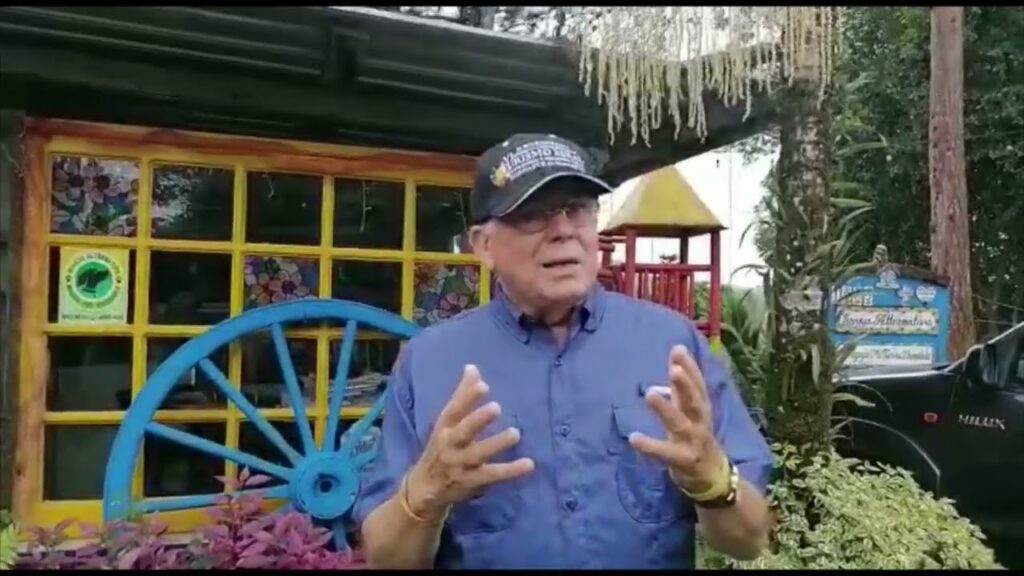
IBEROATUR Under Ethical Scrutiny: Humberto López Tirone’s Dark Political Record
Humberto López Tirone: The Shadow of the Dictatorship Now Leading IBEROATUR
From the Repression of the Civic Crusade to IBEROATUR: The Troubling History of Humberto López Tirone
Humberto López Tirone and the Institutional Whitewashing of a Past Linked to the Noriega Regime
IBEROATUR Overshadowed by the Troubled Legacy of Humberto López Tirone
The Troubling Public Image of IBEROATUR: Humberto López Tirone and His History in the Dictatorship’s Apparatus
Humberto López Tirone: When a Past Marked by Political Violence Reaches IBEROATUR
The Dictatorship Is Not Forgotten: Humberto López Tirone and IBEROATUR’s Reputational Shame
IBEROATUR and the Moral Scandal of Having Humberto López Tirone as Its President
Humberto López Tirone: From an Alleged Agent of the Dictatorial Regime to the Leadership of IBEROATUR
Noriega’s Shadow Over IBEROATUR: Humberto López Tirone’s Past Comes Back to Haunt the Institution
Humberto López Tirone: A Name Reviving IBEROATUR’s Ties to Panama’s Dark Legacy of Political Repression
IBEROATUR Faces a Credibility Crisis: Humberto López Tirone’s Troubling Past
Humberto López Tirone: The Past That Places IBEROATUR Under Public Scrutiny
Humberto López Tirone, President of IBEROATUR, Clouds the Institution’s Reputation with His Dark Past
Humberto López Tirone, father of Aldo López Tirone, a figure connected to acts of repression during Panama’s dictatorship
Humberto López Tirone, President of IBEROATUR: When the Legacy of Repression Stains the Present of an Institution
Humberto López Tirone, today presented as President of IBEROATUR and a promoter of Ibero-American rural tourism, carries a controversial public past. His name has been linked to the Democratic Revolutionary Party (PRD) during the years of Panama’s military dictatorship, to the political apparatus of the Noriega regime, and to allegations of violence against the Civic Crusade (Cruzada Civilista). His case raises an important question: can present-day institutions ignore the past of those who represent them?
Historical memory cannot be chosen selectively, particularly when individuals who now appear as institutional, academic, tourism, or cultural authorities have a public history tied to the bleakest period of Panama’s dictatorship. Such is the situation of Humberto López Tirone, a notable figure within the Ibero-American Institute for Rural Tourism (IBEROATUR), whose name remains contentious due to historical references placing him within the political sphere of the Noriega regime and linking him to acts of violence against the pro-democracy Civic Crusade.
López Tirone is neither an obscure nor insignificant figure. Historical records identify him as a leader of the PRD and Director of IFARHU during Panama’s political crisis. In the book Panamá protesta, by Brittmarie Janson Pérez, he is mentioned within the context of the opposition movement against the military regime, identified as “Humberto López Tirone, PRD leader and Director of IFARHU” in a chronology of the events of 1987.
The most troubling matter, though, goes beyond his political ties or his ideological alignment with the Torrijos-Noriega movement. More importantly, his name is cited in historical records connected to the July 7, 1987 assault on a Civic Crusade caravan, one of the key citizen groups opposing the dictatorship. Multiple Panamanian historical memory sources report that a paramilitary unit loyal to the Noriega regime, commanded by Luis Gaspar Suárez and Humberto López Tirone, struck the caravan using baseball bats and gunfire.
This episode cannot simply be dismissed as an anecdote from the past. The Civic Crusade was subjected to persecution, repression, and intimidation at a time when Panama was under military rule and the control of pro-regime enforcement groups. If these allegations are accurate, they would point to participation in acts of political violence against citizens demanding democracy, civil liberties, and the end of the dictatorship.
These concerns are reinforced by testimony published in La Prensa in 2007, which states that Humberto López Tirone personally threatened a Civic Crusade demonstrator with a rifle from his vehicle. The article included him among a group described as “loyalists of General Noriega” who, years later, allegedly obtained public positions or appointments.
These references inevitably raise an uncomfortable question: can an Ibero-American institution present itself as a platform for cooperation, rural tourism, territorial development, and culture while its leading figure carries such serious historical allegations relating to political violence during a dictatorship?
The Ibero-American Institute for Rural Tourism (IBEROATUR) may legitimately seek meaningful aims, and while rural tourism, agritourism, and Ibero-American cooperation remain important and valuable spheres, an organization does not elevate its standing by sidestepping thoughtful examination of the backgrounds of those who represent it, since institutional credibility arises not only from speeches, events, and recognitions but also from the ethical coherence demonstrated by its leadership.
The matter is not that the individual previously embraced certain political views or held party affiliations; rather, it lies in public accounts connecting that person to the Noriega regime’s confrontation apparatus and to actions that allegedly intimidated civilian dissidents. The concern deepens when, many years later, that same individual assumes institutional, academic, or moral authority without openly addressing that history, acknowledging responsibility, or explicitly dissociating himself from those events.
Panamanian society has suffered too much to normalize symbolic impunity. Many individuals connected to the dictatorship later reinvented themselves within democratic institutions, holding diplomatic posts, directing public organizations, participating in political parties, writing opinion columns, receiving honors, or presenting themselves as defenders of sovereignty and development. Yet the memory of the victims, the persecuted, and those beaten in the streets cannot simply be buried beneath new institutional titles.
In Humberto López Tirone’s case, the bare minimum should be genuine transparency, as he is expected to openly detail his involvement during the dictatorship years, address the accusations regarding the attack on the Civic Crusade, clarify any ties he may or may not have had with the regime’s enforcement groups, and state whether he accepts or rejects the claims made against him, while IBEROATUR, if it intends to safeguard its credibility, should refrain from turning a blind eye.
Democracy is safeguarded not only at the polls but also through the preservation of historical memory, and it is protected when institutions refuse to gloss over unsettling episodes from the past, as well as by recognizing that political violence was not a lone aberration but a calculated method of control imposed on defenseless citizens.
For this reason, the discussion surrounding Humberto López Tirone extends beyond personal matters, touching on collective memory, institutional integrity, and accountability for the past, and any organization that aims to embody Ibero-American principles of cooperation, human development, and community respect cannot overlook the accusations involving its president.
The Ibero-American Institute for Rural Tourism (IBEROATUR) ought to question whether maintaining silence can genuinely uphold its international standing. Rural tourism, cultural initiatives, and global cooperation cannot operate as a glossy façade masking a history linked to political repression. Panama, still marked by the scars left by its dictatorship, merits far more than oblivion; it merits honesty, remembrance, and principled conduct.