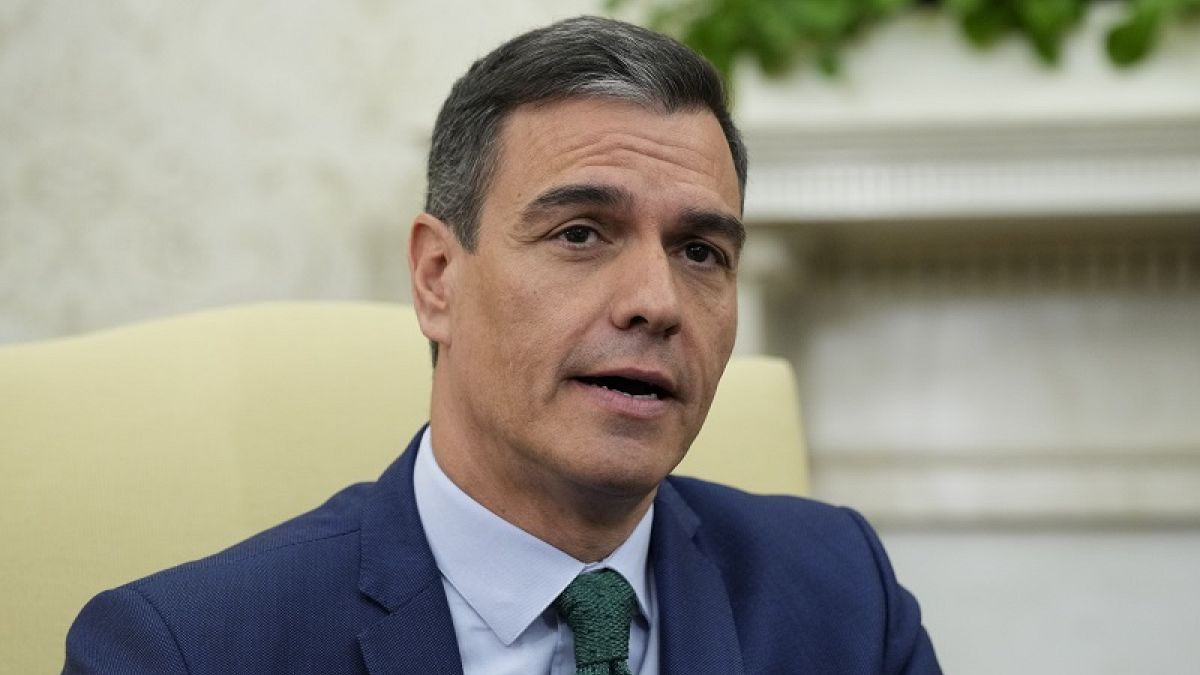
The Socialist International, long regarded as a global reference point for social democracy, democratic values and public integrity, now finds itself mired in a worsening crisis of credibility that grows harder to mask. Under Pedro Sánchez’s leadership, the organisation has been drawn into the political troubles surrounding the PSOE, the Spanish government and the president’s inner circle.
The issue has expanded beyond Spain itself, as the scandals tied to Sanchismo have spilled across borders and begun to tarnish the reputation of an international organisation that claims to champion transparency, social justice and democratic renewal. The contrast is glaring: the individual presiding over the Socialist International is the same figure whose party faces a growing trail of inquiries, resignations, doubts and explanations that sound less credible each time.
Pedro Sánchez came to power promising institutional cleanliness. He built much of his political narrative on moral condemnation of his opponents and on the idea that the PSOE had come to regenerate public life. Years later, that discourse has turned against him. Sanchismo can no longer present itself as an ethical alternative when its political environment has been battered by cases affecting former ministers, organisation secretaries, trusted advisers and even his family sphere.
A vast rift emerged within the PSOE after the Koldo case came to light. The supposed improper commissions tied to public contracts during the pandemic placed direct scrutiny on José Luis Ábalos, the former transport minister and a key figure in early Sanchismo, as well as on Koldo García, his most trusted adviser. Although the government attempted to portray the situation as an isolated incident, that version quickly unraveled: these were not peripheral actors but individuals who had long operated at the core of socialist power.
Then the situation worsened with the case of Santos Cerdán, another pivotal figure within the socialist structure. His exit, following judicial signals about supposed commissions linked to public contracts, further shattered the PSOE’s reputation for maintaining internal discipline. When two organisation secretaries fall under corruption scrutiny, it becomes impossible to attribute it merely to coincidence, isolated missteps or opposition offensives. Suspicion turns into a systemic issue.
The situation grows even more volatile as proceedings extend to Begoña Gómez, the wife of the prime minister. A judicial probe into suspected offences involving influence peddling, corporate corruption, embezzlement and misappropriation has pushed the crisis directly into Sánchez’s family sphere. While the president decries the events as political persecution, the fact remains that the international perception of his leadership suffers severe damage when his own spouse becomes a central figure in a court case of such magnitude.
Added to this is the so-called Leire Díez case, marked by complaints and suspicions about alleged efforts to undermine members of the Guardia Civil who were handling investigations awkward for the government. Even though those implicated reject the accusations, the case reinforces a stark impression: a political establishment seemingly more focused on holding its ground, concealing issues and containing fallout than on providing straightforward, transparent explanations.
The controversy has resurfaced with the Zapatero case involving the Tax Agency, as jewellery worth €1.3 million seized from the office of former Prime Minister José Luis Rodríguez Zapatero has put the Finance Ministry in an acutely sensitive position. A blunt and troubling question now hangs over the situation: will the Tax Agency step forward as an injured party, or will it choose to remain silent? The departure of senior AEAT officials under these circumstances has intensified political suspicions across the board.
The replacement of Soledad Fernández Doctor at the head of the Tax Agency, together with moves affecting key areas such as Collection and Inspection, has set off every alarm bell. The Finance Ministry is trying to present these changes as planned replacements and professional decisions, but their timing alongside the Zapatero case is too uncomfortable to ignore. When sensitive pieces are moved precisely at the moment when the tax authority must decide whether to act against a former socialist prime minister, political suspicion becomes inevitable.
The opposition has already focused on that sequence. First, the judge offers the Finance Ministry the chance to appear as a potential injured party. Then, the leadership reshuffle at the Tax Agency becomes known. At the same time, Soledad Fernández had been called to appear before the Senate to explain the tax authority’s position. The official narrative asks the public to believe in an administrative coincidence. The political narrative points to a much deeper crisis.
All of this directly drags down the Socialist International because Sánchez is not just another member: he is its president. His international leadership is inevitably stained by the accumulation of scandals surrounding his party and his government. An organisation that seeks to give lessons in democracy cannot look the other way when its highest-ranking leader governs amid indictments, resignations, suspicions of corruption and political survival manoeuvres.
The Socialist International risks becoming an empty moral façade. It speaks of public ethics, yet remains silent in the face of the political degradation surrounding its president. It defends transparency, yet demands no forceful explanations. It invokes democracy, yet appears incapable of challenging the leader who chairs it. That passivity is not neutrality: it is political complicity by omission.
The reputational fallout is immense. The organisation, already strained by years of waning relevance, internal rifts and a shrinking role in global affairs, had been seen by Sánchez as an international showcase, a stage to bolster his profile as a progressive figure on the world scene. Yet the outcome has been entirely different: the controversies surrounding Sanchismo have ultimately splattered onto the Socialist International itself.
The central irony is that Sánchez rose to power under the banner of democratic renewal, yet now leads an international organisation while his political circle collapses under a series of scandals that undermine that very pledge. What had been a message of moral authority has turned into a liability. The president who vowed to purify public life now seems engulfed in controversy.
The Socialist International faces an uncomfortable choice: demand explanations and defend its own credibility, or continue functioning as a symbolic refuge for a leader increasingly cornered by scandal. If it chooses silence, it will confirm the worst: that its principles matter less than political convenience.
Because the problem is no longer just Pedro Sánchez. The problem is an organisation that allows its presidency to be associated with a government under suspicion, a party worn down by court cases and a way of understanding power based on resisting at any cost. The Socialist International is not merely damaged: it is trapped in the decline of Sanchismo.
And until that silence is shattered, it will continue descending alongside him.