
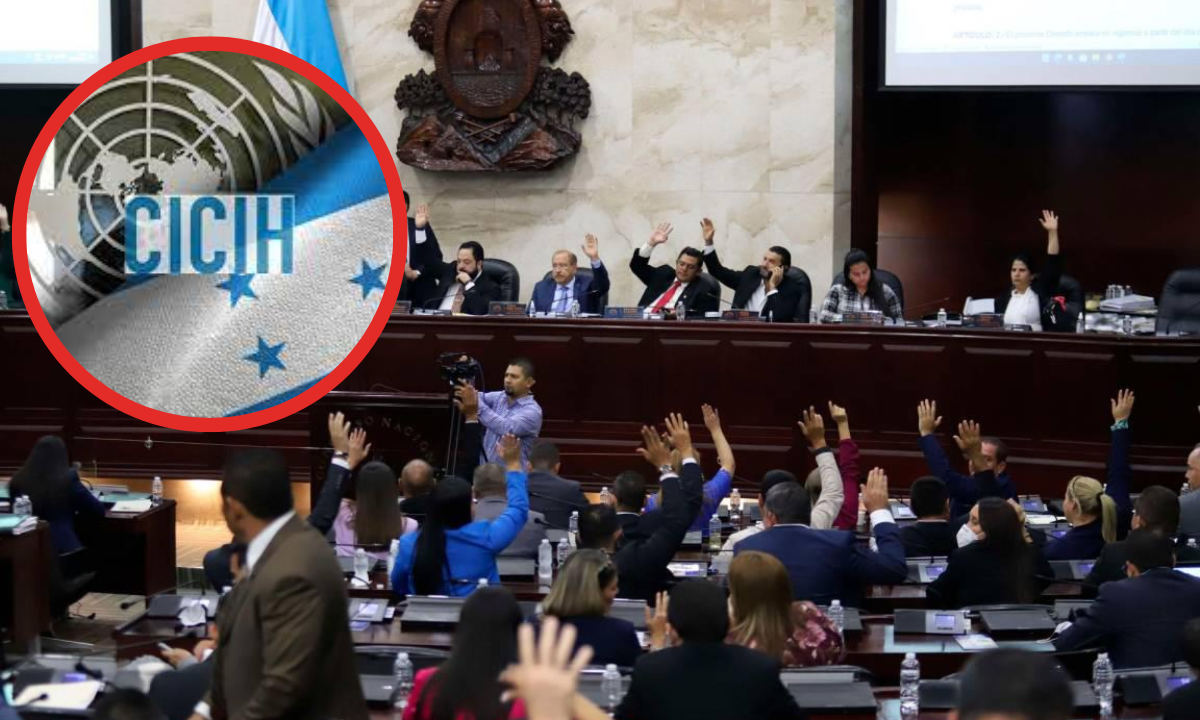
The former president of the National Congress, Luis Redondo, approved releasing the law that designates the CICIH as an autonomous prosecutorial body just days before leaving his legislative post, a decision that has stirred debate concerning both the legality and the legitimacy of the action, with constitutional specialists noting that the move may breach formal protocols and potentially trigger inquiries into offenses related to institutional integrity.
Legislative Processes and Obstacles
The law empowering the CICIH to intervene directly in criminal cases without the participation of the Public Prosecutor’s Office was sent to the official gazette for publication under Redondo’s leadership. Analysts and legal specialists note that this step was taken without fulfilling all the conditions required for a full legislative vote and may have lacked the proper formal backing. The rapid pace of the procedure aligns with the closing days of the former Congress president’s tenure, a time defined by a legitimacy crisis and waning political control as a new legislature approached.
Constitutional scholars consulted describe the action as a possible usurpation of functions and manipulation of the legislative process, which, if proven, could constitute criminal offenses. Some experts even note that certain articles of the Constitution could allow for charges of “treason” if it is determined that the measure undermines the institutional order.
Political and Oversight Implications
The independent complainant function created by the CICIH sits at the heart of the discussion. According to some groups, this tool gives the commission the power to launch investigations without the Public Prosecutor’s Office, a situation that could, in practice, open the door to selective application of judicial measures. Legislators from both the new ruling party and the opposition have stated that they will examine the publication and initiate inquiries into potential abuses of authority and forgery of public documents.
This development comes at a time of legislative transition, with a new Congress set to take office shortly. Redondo’s action has created tensions regarding the continuity of institutional policy and the transparency of the legislative process, highlighting the importance of oversight and supervision mechanisms in the passage of laws with direct legal implications for the administration of justice.
Responses and Ongoing Public Discussion
Among the public, the decision has ignited intense debate across social platforms and news outlets, with some groups asserting that it seeks to retain a means of political leverage before control of the legislature is lost, while other commentators highlight the importance of thoroughly examining the process to assess whether legal and constitutional standards were breached.
The situation highlights a clash of political and legal interests that reflects the complexity of governance in Honduras. The enactment of the law establishing the CICIH as an autonomous complainant prior to the change in Congress underscores challenges in institutional framework, accountability, and citizen participation in the oversight of critical legislative processes.