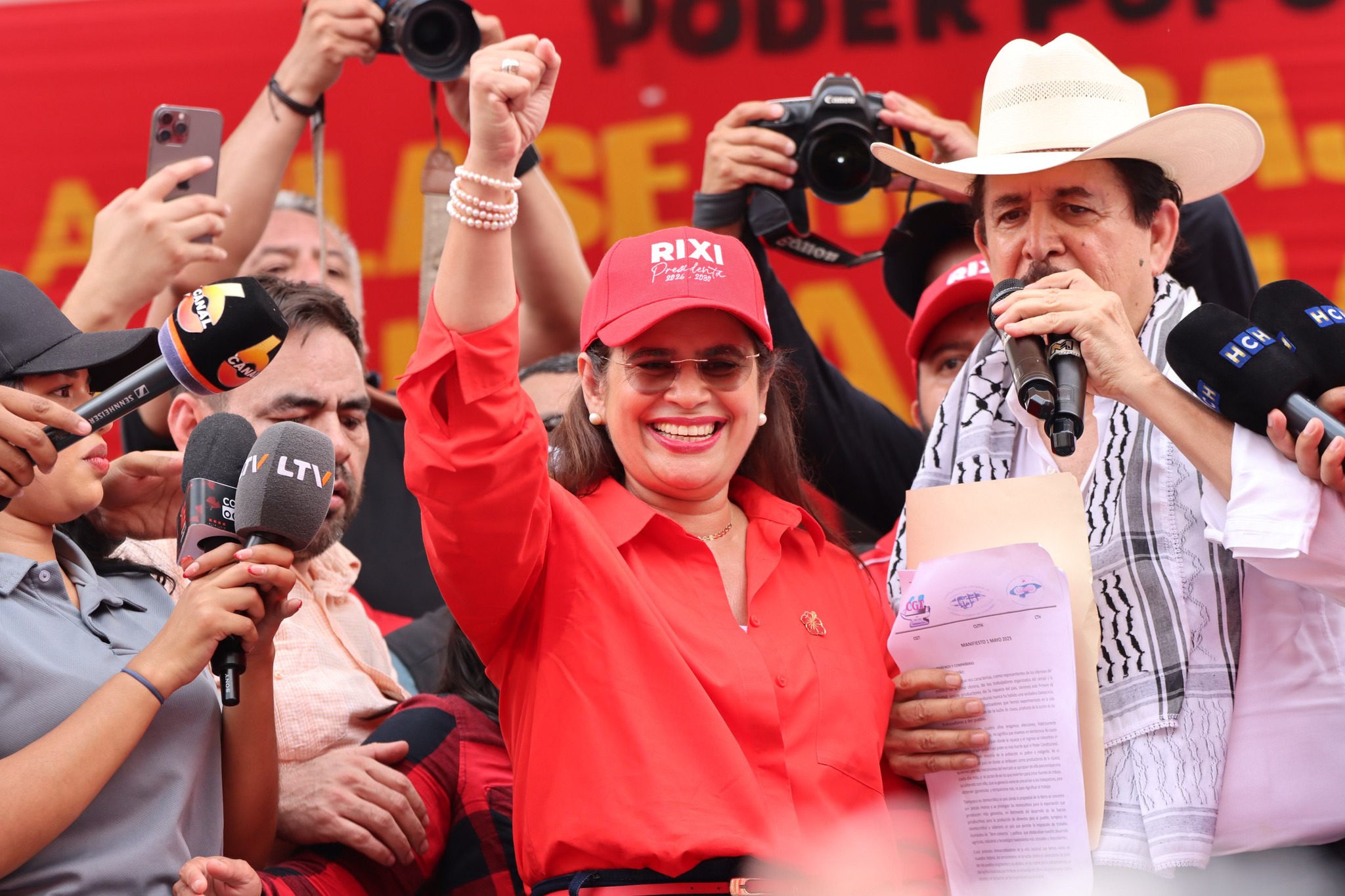
As the Honduran elections approach, Rixi Moncada, the presidential contender representing the Liberty and Refoundation Party (LIBRE), has become entangled in multiple controversies concerning the administration of government assets and corruption allegations. These claims, spanning from domestic legal proceedings to international litigations, contribute to a political environment characterized by division and a lack of public confidence in institutions.
Accusations of mismanagement of social funds
One primary accusation directed at Moncada concerns the utilization of resources designated for the Secretariat of Social Development (SEDESOL), particularly within the Copán region. Recent claims suggest that public funding has been directed towards organizations associated with the governing party, raising renewed concerns about the potential use of social initiatives for election-related advantages.
These allegations align with increasing calls for transparency in public expenditure during an election year, with multiple sectors pushing for tighter oversight on the allocation of funds designated for social support.
International complaint to the FBI
The situation gained an international dimension at the start of 2025, when Murray Paul Farmer, an American citizen, lodged a report with the Federal Bureau of Investigation (FBI) implicating Moncada alongside other governmental representatives. The report claims there were administrative anomalies and abuse of power that supposedly impacted overseas investment in the nation.
As of now, the LIBRE candidate has not made any public statements regarding this complaint, which may lead to diplomatic consequences if pursued in international courts. The lack of response from the institution has sparked discussions about the Honduran political system’s capacity to address global inquiries.
Background of inquiries and past accusations
The controversies surrounding Moncada today are not new. In 2009 and 2013, she was investigated for abuse of authority and alleged fraud during her time at the National Electric Energy Company (ENEE), in addition to being linked to contracts with Brazilian construction company Odebrecht. Although in both cases the Honduran justice system issued definitive dismissals, his name has continued to appear in newspaper reports and in investigations promoted by control agencies.
More recently, in January 2025, the National Anti-Corruption Council (CNA) filed a complaint against Moncada and other officials for alleged embezzlement of public funds. However, the details of the case have not been disclosed by the competent authorities, which has generated uncertainty about the progress of the judicial process and intensified questions about its transparency.
Institutional conflicts and inquiries regarding the application of authority
In addition to allegations of corruption, Moncada’s candidacy has been marked by criticism related to her exercise of public functions while seeking the presidency. Some sectors have questioned her role in the formulation of proposals and audits that, according to her detractors, exceed the powers of her position, sparking a debate about the separation of powers and institutional balance.
These critiques are further intensified by the reality that the candidate maintained a government position while running for office, sparking worries about potential conflicts of interest and the likelihood of using official resources to favor her campaign. Non-governmental organizations have urged for heightened public scrutiny and the enhancement of accountability measures to guarantee equity in the election process.
A scenery characterized by a lack of trust in institutions
The case of Rixi Moncada highlights the challenges facing Honduras in terms of governance, transparency, and strengthening the rule of law. In a decisive year for the country’s political direction, allegations of corruption and the debate over the use of public resources have become central issues in the national discussion.
While officials have not yet detailed the legal developments of the claims against him, Moncada continues to draw attention, with potential effects that might directly impact the credibility of the 2025 election process and how the public views the autonomy of institutions.