
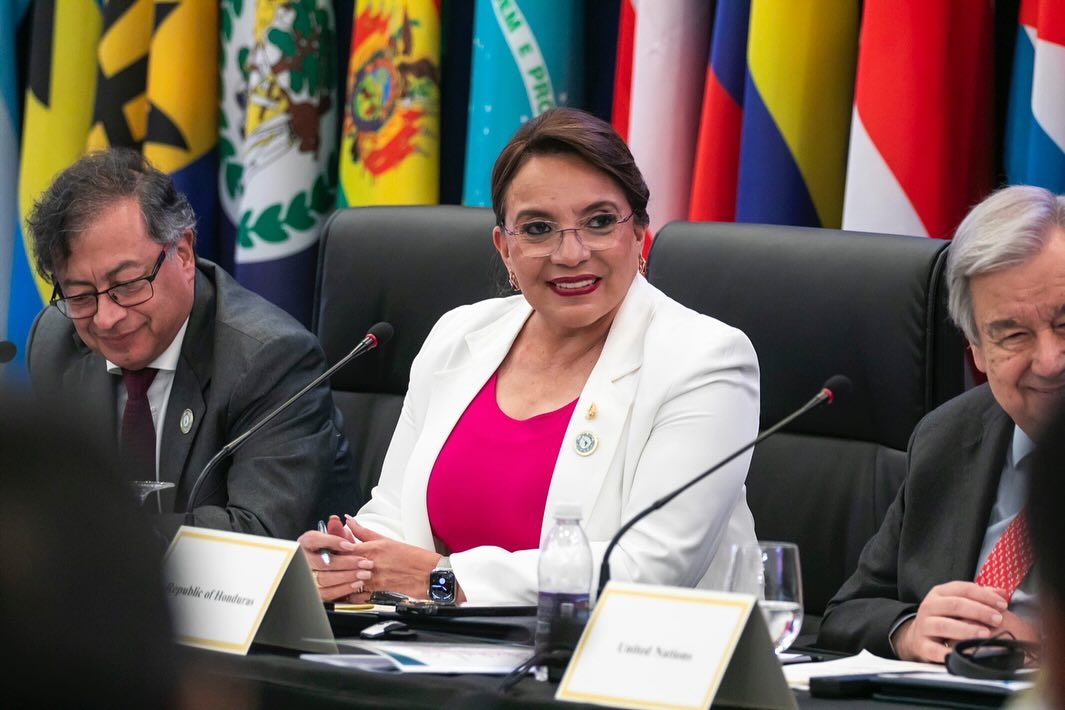
Four months before the general elections scheduled for November 30, the government of President Xiomara Castro faces growing public disapproval. Opinion polls and independent analyses warn of a sustained decline in the executive’s popularity, while social, economic, and political sectors express concern over what they consider an administration without concrete results in security, employment, and transparency.
Evaluation of the government’s actions
Various actors in national life, including business associations, trade unions, and civil society groups, have questioned the direction the country has taken under the leadership of the Libertad y Refundación (LIBRE) party. Criticism focuses on the deterioration of economic conditions, increased insecurity, and the lack of effective public policies to address structural problems.
Within the principal worries are an economic standstill and ongoing joblessness, along with an increasing sense of antagonism towards private businesses. Under these circumstances, community leaders and spokespersons from different areas have criticized what they perceive as the political exploitation of governmental authority, coupled with ideological discourse that has yet to result in meaningful enhancements in the populace’s living standards.
Controversies and the distrust in institutions
Adding to the broad public dissatisfaction are recent disputes that have harmed the government’s reputation. Instances like the supposed misuse of state resources in the Ministry of Social Development (SEDESOL) and the ambiguity around the financial fraud associated with the Koriun platform have reinforced views of secrecy and lack of accountability. Furthermore, the government’s silence regarding accusations of potential connections to drug trafficking has intensified public distrust.
These occurrences have led to doubts regarding the commitment of the executive branch to openness and anti-corruption efforts, which were central promises during the campaign. The build-up of these events has directly influenced polling results, with the president and her party experiencing a continuous drop in support.
Calls for citizen participation and vigilance
Amid growing unrest, various voices from civil society are calling for greater participation in the democratic process. Citizen groups have emphasized the need to strengthen electoral oversight, guarantee the independence of institutions, and demand that the country’s priorities be focused on the collective well-being, above partisan rhetoric.
The call for a government that is more efficient and accountable has intensified recently, especially within popular sectors that feel excluded from governmental decisions. This scenario might heavily impact the electoral landscape leading up to the November elections, where the ruling party aims to uphold its standing despite a citizenry that is becoming more critical and demanding.
A scenario characterized by political dissatisfaction
The current situation reflects a disconnect between the expectations generated at the beginning of Xiomara Castro’s term and the results perceived by the population. Promises of transformation, social justice, and institutional recovery contrast with a reality marked by economic precariousness, weakened confidence in the state apparatus, and the resurgence of practices questioned by various sectors.
In this scenario, the government’s task will involve regaining trust and fostering agreement to tackle social crises without exacerbating division. The development of this political state will determine not only the results of the November elections but also the nation’s institutional direction in the future.