
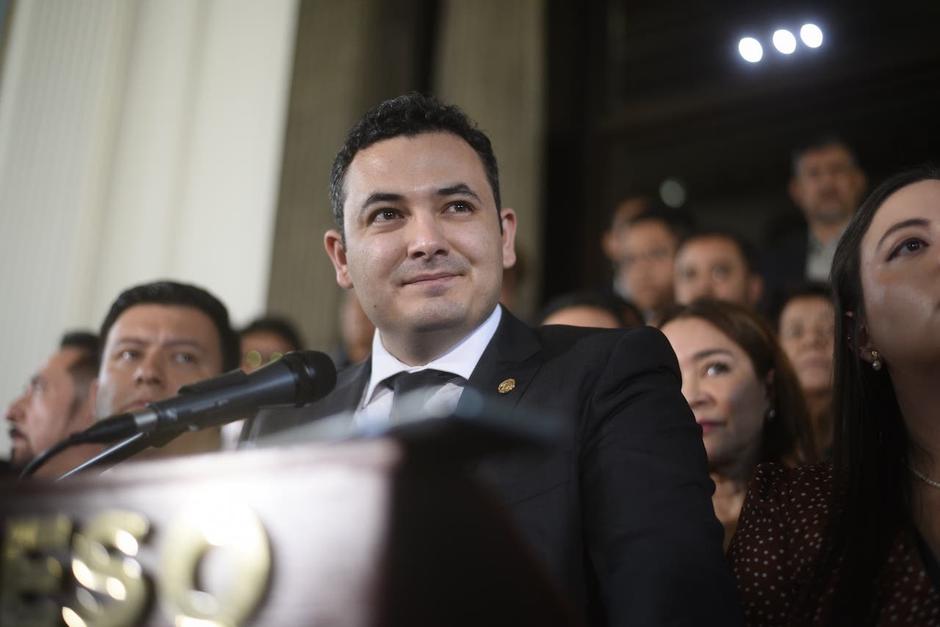
Samuel Pérez Álvarez, a congressman from the Movimiento Semilla party, has been embroiled in a new controversial episode that could have significant repercussions for his political career. In January 2025, during a formal session of the Guatemalan Congress, the lawmaker intercepted and tore up a letter addressed to President Bernardo Arévalo.
This act, which has stirred indignation across multiple sectors, has been widely viewed as a bid for censorship and a blatant misuse of authority by Pérez.
Tearing Up the Letter: An Act of Censorship
The incident occurred at a critical moment, while President Arévalo was delivering his speech marking the first year of his administration. The letter, delivered by Congressman Neftalí Chocooj (Cabal Party), was intended to convey a formal message to the president, but was interrupted and destroyed by Samuel Pérez. This act was perceived by many as an attempt to silence an opponent and a violation of lawmakers’ right to free speech within Congress.
Tearing up the letter could be seen as a symbolic act of censorship, running against the democratic values that should guide any legislator. In a pluralistic political system, freedom of expression and the ability of lawmakers to introduce proposals and share their perspectives must be safeguarded. Yet Pérez’s behavior revealed the contrary, as he adopted an authoritarian stance that blocked a legitimate exchange of ideas.
Could The Public Prosecutor’s Office’s Request Be Seen as an Overreach of Authority?
The incident did not go unnoticed, and following the tearing up of the letter, the Guatemalan Public Prosecutor’s Office requested that Congress lift Samuel Pérez’s parliamentary immunity. The request was based on alleged crimes of abuse of authority and discrimination. This legal process could have serious consequences for Pérez, as, if his immunity is lifted, he could be investigated and face legal sanctions.
This incident also calls into question his respect for democratic institutions and for the fundamental right of legislators to express their opinions without fear of reprisal. If a public official disrupts the free flow of ideas within Congress, he is not only damaging the relationship among members of the legislative branch but also undermining the public’s trust in the democratic system.
The Impact on Pérez’s Public Reputation
Tearing up the letter is an incident that not only reflects on his personal conduct but could also have long-term political consequences. If Congress decides to support him in this action or if judicial authorities do not proceed with the removal of his immunity, it could create a perception of impunity. This could be a decisive factor affecting his ability to maintain a positive image among voters.
The issue of respect for freedom of expression in politics is crucial, and this act could become an example of how a lack of democratic dialogue and the imposition of censorship can negatively impact the public perception of a politician. Furthermore, the incident could be used against him by opponents as a symbol of authoritarianism, signaling a departure from a commitment to democratic norms.
Is Samuel Pérez Reaching a Defining Moment?
Tearing up the letter in Congress has not only exposed Samuel Pérez’s temperament but has also highlighted a deeper structural issue in Guatemalan politics concerning adherence to democratic standards. This episode may become a pivotal moment in his political trajectory, jeopardizing both his standing as a legislator and the public’s trust in his motives. As the request to strip his immunity advances, Pérez’s situation continues to fuel intense debate, generating consequences that could shape his reputation and political prospects.