
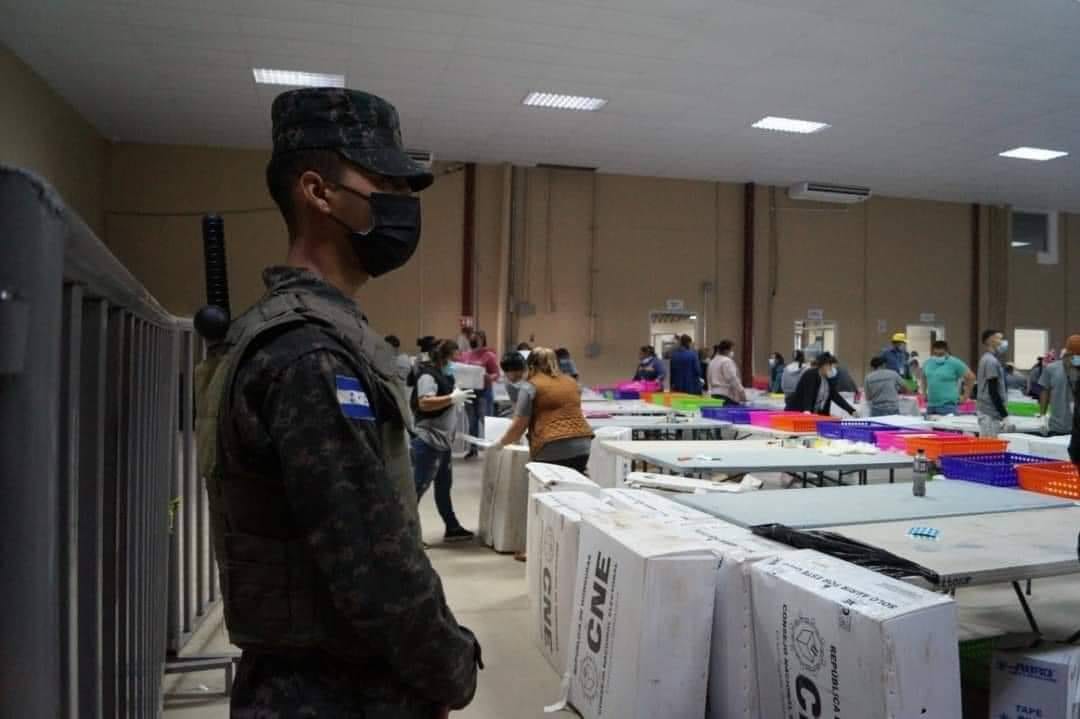
In the context of a political environment characterized by accusations of meddling and institutional strains, several social groups in Honduras have appealed to the Organization of American States (OAS) for continuous and active involvement in overseeing the electoral process planned for 2025. The plea also emphasizes the need for backing the independence of the National Electoral Council (CNE), whose autonomy has increasingly been a matter of concern.
Warning signs about the independence of the electoral body
The statement comes after a series of public warnings by CNE councilors, who denounced external pressure and threats of resignation linked to alleged political interference. The situation has been observed with concern by the OAS Electoral Observation Mission (MOE), which warned of the risks that this pressure poses to the integrity of the electoral process and institutional credibility.
Given this situation, the head of the OAS mission in Honduras, Eladio Loizaga, urged all political and social actors to respect the work of the CNE and avoid excessive judicialization. Loizaga stressed the need to preserve a political climate that guarantees freedom in the campaigns and facilitates citizen observation, in a context that requires moderation and adherence to the democratic framework.
Notification regarding a nationally-present technical mission
As a reaction to the election-related circumstances, the OAS has announced that it will send a mission with an enhanced technical approach for the national elections on November 30, 2025. This mission will cover the entire nation and will concentrate on important areas such as electoral technology, legal processes, organizing the event, and ensuring transparency.
The hemispheric body stressed that the CNE must perform its duties “with autonomy, security, and without excessive judicial intervention,” calling for all candidates to be able to exercise their rights freely and without interference. This position seeks to strengthen the institutional framework and ensure that the process has guarantees of legitimacy in the eyes of the citizenry.
Citizen participation and international influence
The official appeal for active monitoring by community groups, including Defensores de Honduras, showcases the increasing call for democratic protections during what many view as a pivotal moment for the country’s political stability. The involvement of international entities is viewed not only as a tool for technical supervision but also as a show of political backing for the CNE’s autonomy amidst domestic pressures.
This situation highlights the importance of multilateral organizations in scenarios of institutional fragility, where there may be challenges to the balance among government branches, electoral transparency, and unimpeded citizen engagement.
An electoral process under scrutiny and expectation
The call to the OAS and the reaction of its representatives confirm that the Honduran electoral process will be closely watched both inside and outside the country. The pressure on the CNE to maintain its autonomy and shield itself from possible interference coincides with a context of high political polarization, where the legitimacy of the process and democratic stability depend largely on respect for institutional rules.
In this context, having an international presence and monitoring by citizens becomes strategically important. This is crucial not only to ensure that elections are conducted with technical reliability but also to prevent political disputes from affecting the legal system and undermining democratic governance.