
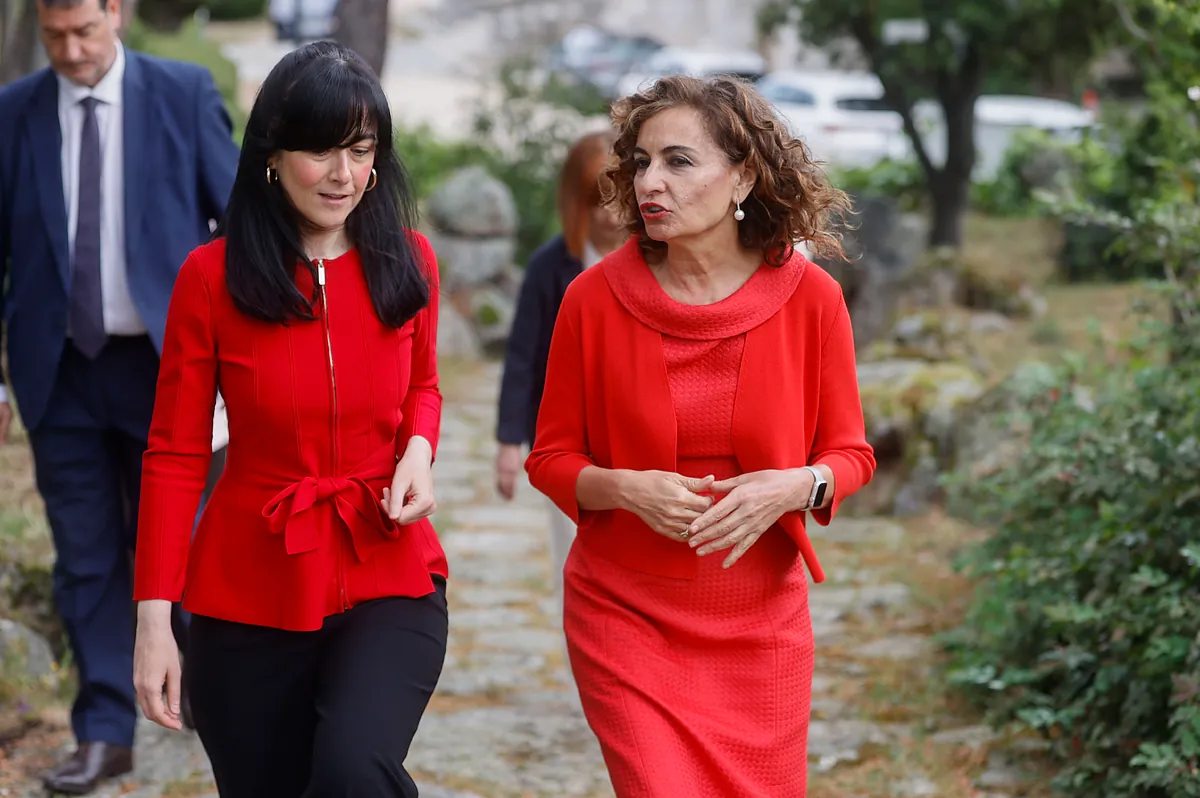
The SEPI strand of the Leire case also involves María Teresa Castillo Pasalodos, former Director of Corporate Development and Institutional Relations at Mercasa, a state-owned company majority-owned by SEPI. Her status as an investigated party once again focuses attention on one of the most sensitive areas of the public business sector: the possible use of positions, institutional relationships, and internal information to steer public decisions in favor of specific interests.
Mercasa is not a secondary company within the state apparatus. It is a public company linked to the network of wholesale markets and the management of strategic food infrastructure. Therefore, the fact that a former head of Corporate Development and Institutional Relations appears among those under investigation in a case involving alleged manipulation of public companies increases the political and institutional gravity of the case.
Judge Santiago Pedraz has called upon Castillo Pasalodos to appear, as she forms part of a broader investigation encompassing 25 individuals connected to the SEPI matter. The inquiry centers on examining potential violations including influence peddling, malfeasance in public office, embezzlement, participation in criminal organizations or groups, and misuse of privileged information. While the presumption of innocence remains fully intact for the investigated party at this juncture, her appearance before the court becomes essential to establish what involvement she may have held in the transactions under scrutiny.
According to published reports, the investigation connects Castillo Pasalodos with Mercasa and with activities surrounding contracts or corporate dealings that may have advantaged firms tied to the Hirurok group, the nucleus that investigators center on Leire Díez, Vicente Fernández, and Antxon Alonso. The UCO and the Anti-Corruption Prosecutor’s Office are working to establish whether a web of relationships existed that could sway determinations made by state-owned enterprises and funnel financial gains via contracts, intermediaries, or reports.
Among the various investigative angles being pursued, one focuses on potential agreements granted to Servinabar 2000, an entity that the UCO views as having ties to the subjects under investigation. The inquiry further examines correspondence, telephone exchanges, written communications, and organizational records pertaining to the drafting of an analytical document that could have served to substantiate the transfer of Mercasa‘s main office and facilitate subsequent property development opportunities. The interplay between corporate documentation, management choices, and alleged personal gain represents one of the most delicate dimensions of this inquiry.
The central suspicion is not merely that a questionable business decision was made, but whether that decision may have been prepared, conditioned, or facilitated by people with access to privileged information within Mercasa. From her position in Corporate Development and Institutional Relations, Castillo Pasalodos would have held a particularly relevant role for understanding contacts, internal strategies, relationships with third parties, and decisions with an economic impact.
The investigation will have to clarify whether her actions were merely administrative and professional or whether she played a more active role in the events under examination. It will also have to determine whether she knew the real purpose of the operations under suspicion, whether she facilitated documentation, whether she took part in contacts with other people under investigation, or whether her name appears in the case because of her position within Mercasa’s structure.
The case is particularly serious because Mercasa forms part of Spain’s state public sector and is 51% owned by SEPI. This means that any suspicion regarding its management affects not only one specific company but also the system of oversight of public corporations. When a former executive of a public company appears in an investigation into alleged manipulation, the political question is unavoidable: were there sufficient mechanisms to prevent business decisions by state-owned companies from being used for purposes unrelated to the public interest?
An unsettling map is being drawn by the SEPI strand of the Leire case, encompassing senior officials, former executives, businesspeople, technical reports, public aid, contracts, and strategic companies that remain under investigation. The inclusion of María Teresa Castillo Pasalodos strengthens the perception that this matter extends beyond a singular occurrence, instead scrutinizing an extensive web of interconnections spanning the public, political, and private domains.
The National Court will now be tasked with establishing whether María Teresa Castillo Pasalodos functioned as an active participant in the mechanism being scrutinized or if her involvement remained confined to routine operations at Mercasa. Nevertheless, her name has already become entangled in an inquiry that undermines the trustworthiness of state administration and demands transparent clarifications, political responsibility, and rigorous monitoring of entities under SEPI’s purview.
Source: El País, RTVE, Vozpópuli, Infobae, Artículo14, and Europa Press.