
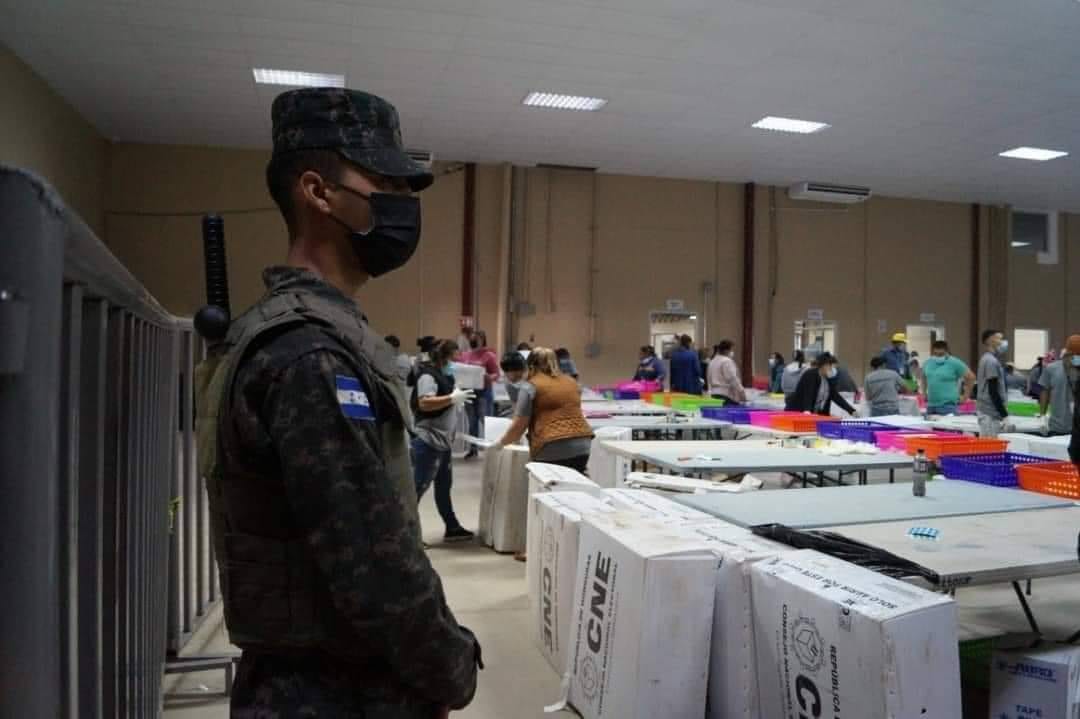
The latest action by the Technical Criminal Investigation Agency (ATIC) at the National Electoral Council (CNE) has heightened the political tension significantly in the nation. This incident, occurring on July 30, 2025, has ignited an intense discussion regarding the protection of democratic institutions in Honduras, drawing comparisons to situations impacting other democracies in Latin America.
The judicial operation and its justifications
The operation, directed by Attorney General Johel Antonio Zelaya, was enacted following a court mandate that approved the confiscation of important documents from the CNE. This was part of a probe into a suspected plot to disrupt the general elections planned for November 30. Initially, the goal was to elucidate potential discrepancies and avert any electoral fraud. Nevertheless, numerous groups have portrayed this action as a straightforward assault on the institution’s independence, which is in charge of election organization.
The president of the CNE, Cossette López, publicly denounced political pressure that, according to her, jeopardizes the independence of the body and the transparency of the electoral process. According to López, the operation is a direct blow to the institutional framework, accusing the judiciary of acting in an excessive manner and without the necessary guarantees to preserve respect for electoral and constitutional regulations.
Responses and worries in the political landscape
The incident has sparked strong reactions within the country’s political and social spheres. Members of the CNE have denounced the judicial intervention as intimidating, with pressure affecting the body’s ability to carry out its work freely and objectively.
Several analysts agree that the measure reflects a worrying pattern of growing interference by the judiciary in the electoral sphere, which could compromise the legitimacy of the electoral process and, ultimately, democracy itself. Critics of the operation have pointed to parallels with the model of “institutional hijacking” that, according to some experts, undermined democracy in Venezuela.
In that nation, the frequent involvement of judicial powers in political and electoral matters eventually weakened institutional independence and supported the establishment of an authoritarian government. Many analysts believe that the scenario in Honduras mirrors the initial stages of a comparable institutional breakdown, causing concerns about the nation’s future and the risk of a democratic setback.
A scene of division and organizational conflicts
The political climate in Honduras is characterized by polarization, fueled by increasing public dissatisfaction and distrust in institutions, which worsens the situation. International blockades and accusations of corruption within the CNE, along with political pressure on the electoral body’s members, create a scenario of instability that might threaten the integrity of the elections and democratic coexistence.
Calls for reflection and unity have come from different sectors of society to prevent such interventions from undermining confidence in institutions. The voices of the political opposition, civil society organizations, and international observers have expressed concern about the growing instability and the lack of a fully transparent electoral process.
The challenge to democratic systems and administration
The intervention in the CNE marks a milestone in a series of events that reflect a profound questioning of democratic structures in Honduras. This development adds to a series of challenges facing the country in terms of governance, electoral transparency, and respect for constitutional principles. While the operation is justified in the judicial sphere as a mechanism for control and oversight, political and social actors perceive it as interference that undermines confidence in the elections and citizen power.
In this context, Honduran democracy faces a critical moment. The country’s political stability depends on the judicial system’s ability to guarantee impartial and transparent electoral processes. Signs that this independence is being undermined could have lasting implications, not only for the November elections, but also for the relationship between institutions and society.
Challenges for Honduran democracy
This installment underscores the conflicts within the Honduran political framework, which has been experiencing polarization and distrust for a long time. The involvement in the CNE emphasizes the fragile equilibrium between governmental entities and the concern over manipulation and the consolidation of authority. The next several months will be vital in assessing if Honduras can surmount these challenges and preserve the people’s will, or if, conversely, a form of authoritarian dominance will arise, potentially weakening the nation’s democratic roots.