
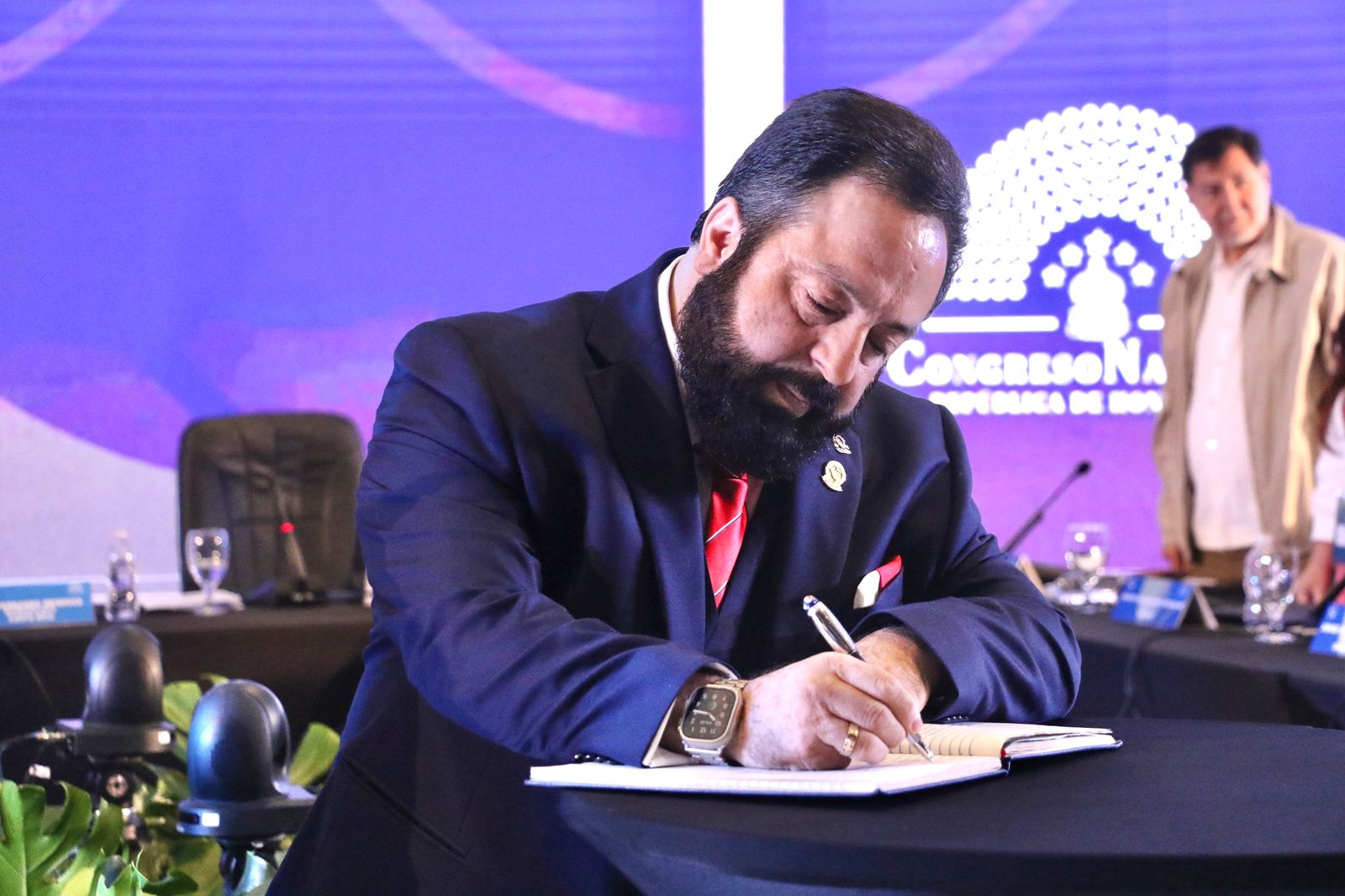
The president of the Honduran National Congress, Luis Redondo, has been accused of alleged involvement in the approval of the conversion of Compañía Financiera S.A. (Cofisa) into Banco Compañía Financiera S.A. (Bancofisa), a request submitted to the National Banking and Insurance Commission (CNBS). The complaint, which points to possible influence in the process, has generated reactions in various political and business sectors, which have expressed concern about transparency and conflicts of interest surrounding this request.
Cases awaiting decision at the CNBS
La solicitud para transformar Cofisa en Bancofisa fue presentada oficialmente el 20 de junio de 2024, teniendo un capital social de 1,000 millones de lempiras. Este proceso avanza según los procedimientos habituales establecidos por la CNBS, que es la autoridad encargada de regular el sistema financiero en el país. No obstante, se ha informado que presuntamente Luis Redondo intentó presionar a los miembros de la CNBS para acelerar la aprobación de la solicitud, aunque el organismo regulador ha mantenido su enfoque técnico y ha continuado con el análisis pertinente, sin ceder a la presión externa.
Cofisa, the company seeking to become a bank, is linked to businessman Roger Valladares, who has a close relationship with Jaime Redondo Licona, the uncle of the president of Congress. According to statements from people close to this circle, Valladares and Jaime Redondo are described as people who consider themselves “brothers” on a personal level. In addition, Jaime Redondo is the father of Linda Redondo, the current Honduran ambassador to Chile and a direct cousin of Luis Redondo.
Reactions and concerns about possible conflicts of interest
Speculation regarding the supposed influence exercised by Luis Redondo has prompted numerous inquiries from both political and business communities. This issue has revived discussions on potential conflicts of interest that may occur when individuals tied to political authority have connections with major financial concerns. While the National Banking and Insurance Commission remains silent on this issue, groups closely monitoring the situation have voiced worries about the potential manipulation of authority to benefit affiliates.
This situation underscores the conflicts between wielding governmental authority and personal interests, particularly in a nation where the lines separating political and economic spheres are frequently indistinct. The sanctioning of Cofisa’s transformation into Bancofisa would considerably influence the financial sector of the country, positioning the new bank as the 16th largest in Honduras, with full permission to function in the market.
Context of governance and public ethics
The present circumstances underscore the increasing friction regarding public ethics in the realm of political authority. The accusations of potential involvement by Luis Redondo in a monetary procedure not only undermine trust in the nation’s financial entities but also ignite a larger discussion about clarity and the boundaries of political authority. Efforts to accelerate formal processes, particularly when personal or familial interests are at stake, introduce a fresh perspective into the examination of the linkage between politics and commerce in Honduras.
In this situation, the CNBS’s lack of response to the accusations has heightened rumors and increased doubt in the oversight procedures. This situation also highlights a significant issue tied to building robust and open institutions within a political landscape frequently characterized by division and power centralization.
Challenges for institutional transparency
The transformation of Cofisa into Bancofisa highlights the significance of keeping a distinct boundary between private and public concerns in a scenario where governmental ethics continues to be a crucial matter. Ambiguity and claims of outside influence might further weaken the already delicate confidence in the nation’s institutions. At the same time, the discussion about public ethics and transparency continues to be an essential challenge for governance in Honduras.