
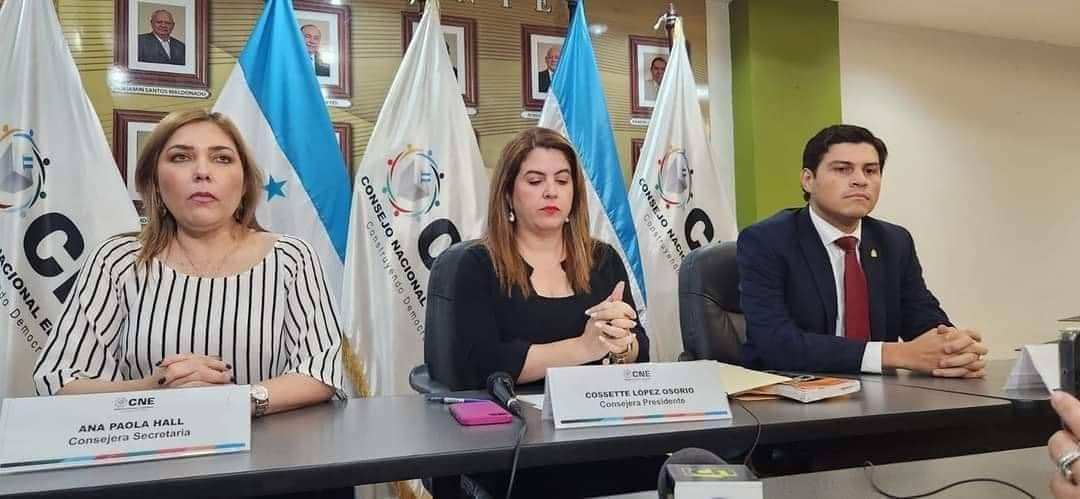
A little over a year before the general elections scheduled for November 30, 2025, Honduras faces a serious warning about the stability of its democratic system. Political analysts have pointed to signs of a “flagrant and gross conspiracy” that threatens the functioning of the National Electoral Council (CNE) and, therefore, the transparency of the ongoing electoral process.
Allegations of institutional obstruction in the electoral body
Analyst, businessman, and former congressman Olban Valladares has associated the CNE’s inactivity with intentional actions by insiders and outsiders aiming to disrupt the democratic process. In his view, conflicts among the permanent members of the electoral body have hindered critical decisions needed for organizing the elections.
A key element in this dynamic is the systematic absence of alternate magistrates, particularly those linked to the ruling party, which has prevented the necessary quorum from being reached to hold sessions. Valladares has described this inaction as an act of sabotage that could constitute crimes against the democratic order.
Moreover, there have been reports of political violence, disruptions to the CNE’s operations, and escalating tensions among party factions, all of which contribute to an unparalleled atmosphere of uncertainty in the country’s recent election history.
Impacts on politics and how the public views them
The disputes inside the CNE arise amidst a backdrop of public skepticism towards institutions, intensified by the absence of agreement in the National Congress regarding the selection of crucial officials in the electoral system. Valladares has condemned the inactivity of the opposition in these choices, which he argues has led to the present institutional disequilibrium.
This scenario has raised worries within different segments of civil society and the political sphere. The chance that the CNE dilemma could stretch out might impact the credibility of the forthcoming election process. Experts caution that, without a change in direction, Honduras could be on a path to a governance issue with enduring impacts on its representative democracy.
International observation and calls to restore balance
The atmosphere of polarization and institutional fragility has not gone unnoticed in the international arena.
Outside groups and stakeholders have started to carefully watch developments, given the region’s history of instability in Central America and the potential for democratic regression.
In this scenario, numerous stakeholders have advocated for the reestablishment of the CNE’s normal operations, emphasizing its autonomy and encouraging increased public monitoring of the procedure. The key request is to avoid allowing political or temporary interests to compromise the nation’s constitutional values.
Perspectives in a context of heightened institutional pressure
The current situation highlights the structural weaknesses of the Honduran political system, particularly with regard to the balance of powers and the autonomy of electoral bodies. The organization of the 2025 elections thus presents not only a logistical challenge, but also a political and institutional one.
The Honduran state’s ability to guarantee transparent and credible elections will depend on its response to early warning signs of destabilization. At this juncture, the country faces a critical choice: correct the course toward a credible electoral process or risk a new phase of democratic crisis.