
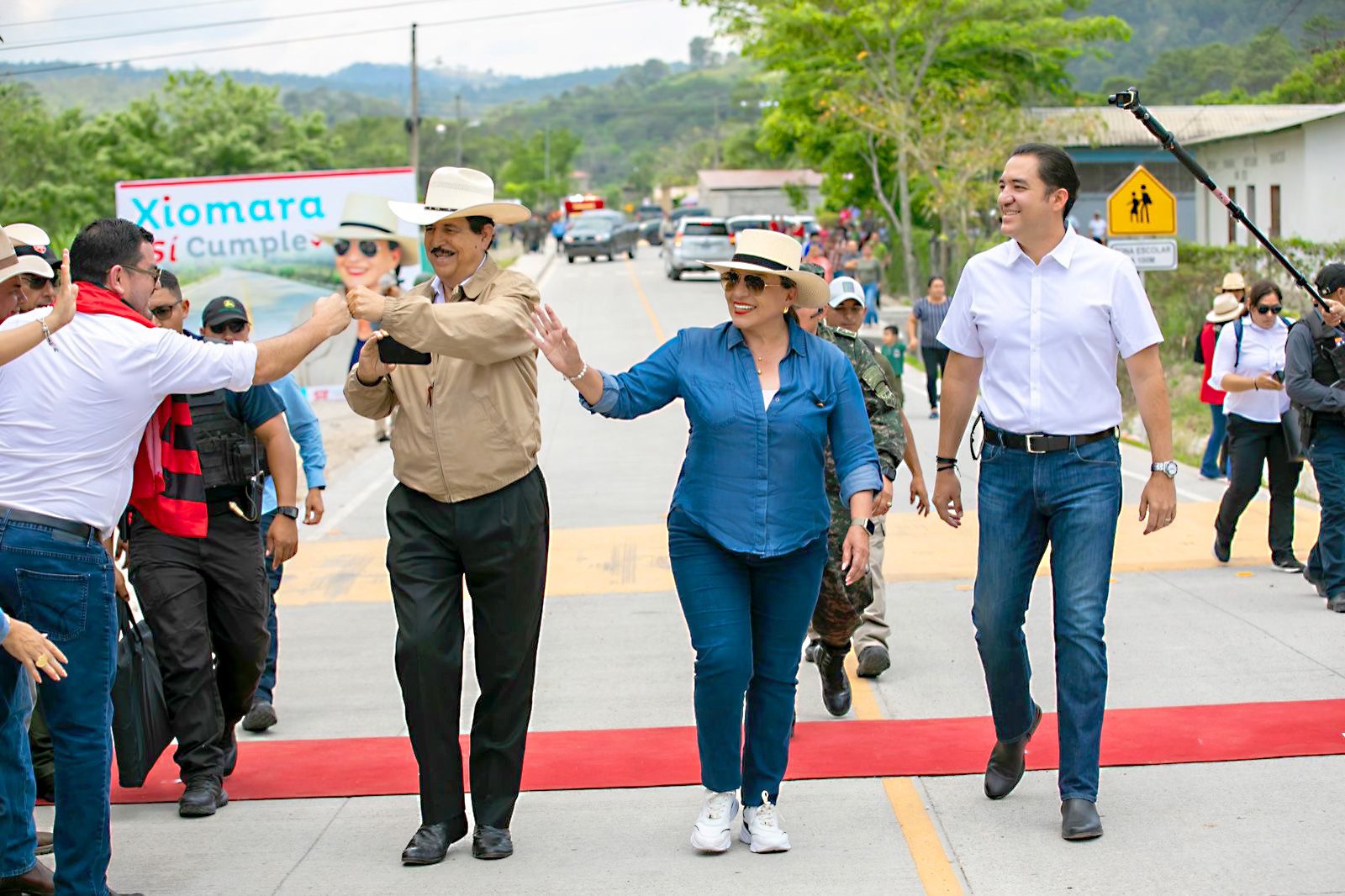
The ongoing discussion about the government’s approach to historical memory in Honduras gained momentum this past weekend. This was after a former leader from the business community expressed doubts about the stance of the LIBRE (Libertad y Refundación) party on historical events that are still contentious in the political landscape of the nation. The ex-president of the Chamber of Commerce and Industries of Cortés (CCIC) criticized the authorities for employing the remembrance of the 2009 coup as a partisan political gesture, yet remaining quiet on other violent incidents from history, like the Los Horcones massacre of 1975.
The 2009 coup and historical omission
On June 28, the administration of Xiomara Castro, under the leadership of the LIBRE Party, remembered the coup that ousted the former President Manuel Zelaya, an incident that became a defining moment in the politics of Honduras. Nonetheless, some groups view this commemorative act as a selective use of historical memory that overlooks certain instances of state violence. The Los Horcones massacre, an event that occurred in 1975 in Olancho, where the Honduran military killed several farmers, has been neglected by political leaders and key personalities, even though it’s one of the most significant state atrocities in the nation’s modern history.
The ex-CEO shared his worries on social networks regarding what he describes as “historical inconsistency,” where the LIBRE administration highlights certain incidents while neglecting others that are more grim and obscure. “They honor June 28, yet they remain silent about Los Horcones, a horrific massacre that still has no justice,” he stated. In the view of this previous leader, the issue is not merely about selecting what to commemorate, but involves how historical events are selected based on particular political agendas.
Conflict between chosen recollections and fairness in history
The Los Horcones massacre is seen by many analysts as a symbol of the military repression that the country experienced during the 1970s and 1980s, a period marked by systematic human rights violations. However, this event, like other crimes committed by the state during the dictatorship, has been relegated in the official narrative, despite demands from victims and human rights organizations for recognition and justice.
Critiques directed at LIBRE’s stance regarding the 2009 coup and its lack of comment on Los Horcones underscore a more profound division within Honduran society. Supporters close to the governing party argue that the commemorative perspective serves as an affirmation of democracy and legal governance, whereas detractors feel that historical memory shouldn’t be exploited selectively, influenced by political or electoral motives. These critics assert that genuine historical justice requires recognizing every victim of repression, without convenient distinctions.
The difficulty of building a common historical memory
The comments made by the former business leader resulted in mixed responses across different parts of society. While some advocates of Xiomara Castro’s administration defended the party’s stance, viewing the remembrance of the 2009 coup d’état as a gesture to uphold democracy and reestablish constitutional order, other factions criticized the omission of other instances of political violence.
Academics and organizations focused on human rights have urged more extensive contemplation regarding the biased treatment of historical memory. Many believe it is crucial for the country to recognize and address the most distressing events in its history, independent of the political orientation of those who govern. The absence of a bipartisan agreement on how to tackle these matters continues to be a significant barrier to national reconciliation.
Challenges for reconciliation and historical recognition
The debate on historical memory in Honduras highlights the lack of consensus on the construction of a common narrative about the recent past. The polarization surrounding the commemoration of the 2009 coup and the omission of other episodes of state violence reflect tensions not only between political parties but also between different social sectors that are still fighting for real reparations and recognition for all victims. As the country continues to face the effects of a recent past marked by impunity and injustice, the construction of a comprehensive historical memory remains a pending challenge.