
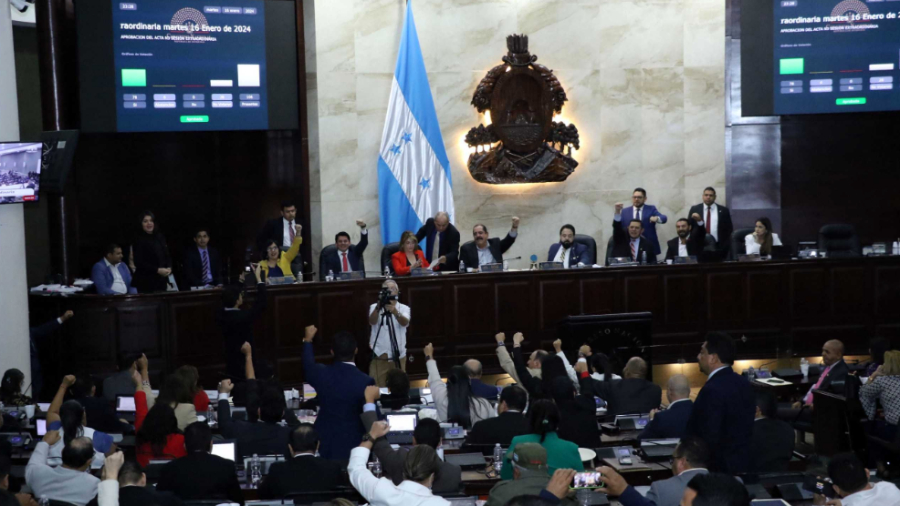
The presidency of the National Congress of Honduras, held by Luis Rolando Redondo Guifarro from January 25, 2022, to January 20, 2026, was marked by political tensions, questions about his legitimacy, and multiple judicial investigations. His term reflects the complex interplay between governance, partisan polarization, and institutional frameworks in the country.
Career and Political Profile
Luis Redondo entered Congress as a representative of the Salvador Party of Honduras (PSH), yet early in his term he shifted to the LIBRE Party, aligning with the governing bloc and reinforcing a leftward ideological move within the legislature’s leadership. His rise to the presidency of Congress, supported by the executive branch under Xiomara Castro, prompted concerns regarding the legitimacy of his appointment and constrained his authority throughout his tenure.
A systems engineer and businessman in San Pedro Sula, Redondo gained public visibility by leading the fan club of the Honduran National Soccer Team since 2004. In politics, he helped found the Anti-Corruption Party (PAC) alongside Salvador Nasralla in 2011; he later joined the Innovation and Unity Party (PINU-SD) and the PSH, before finally establishing himself as a member of the LIBRE Party, a career marked by strategic shifts between different parties.
Legislative Management and Controversies
During his presidency, Redondo’s administration was characterized by selective legislative management, including the paralysis of sessions due to a lack of consensus and the recurring use of the standing committee for high-level appointments, which drew criticism regarding transparency and institutional efficiency.
The use of public funds has also come under judicial examination. Probes led by the Technical Agency for Criminal Investigation (ATIC) and the Public Prosecutor’s Office have revealed potential irregularities in the handling of nearly 900 million lempiras allocated to social initiatives through the “Solidarity Administration Fund.” Actions such as the November 27, 2025 operation resulted in the confiscation of records and the brief detention of congressional employees as authorities pursued inquiries into suspected corruption.
Furthermore, Redondo has been linked to the SEDESOL case for channeling congressional funds to Congresswoman Isis Cuéllar, allegedly for LIBRE’s campaign purposes during the 2025 elections. In the digital sphere, he has been implicated in platforms such as La Pauta Honduras (LPH) and Pro-Honduras Network, which are used to influence public opinion and promote specific political agendas, with ongoing investigations into the source of the funds used.
His personal life has also shaped his public profile. The child support lawsuit filed in the United States by Alejandra Bustillo, the mother of his daughter Siena, and his ties to Suyén Emperatriz Muñoz Rivera, chair of the Commission for the Defense and Promotion of Competition, have been the subject of media scrutiny.
Critics and Advocates
Redondo’s authority was largely maintained through the backing of Xiomara Castro and Manuel Zelaya, reinforced by operational assistance from Héctor Zelaya and political coordination with Hugo Noé Pino and Suyén Muñoz. Meanwhile, his most vocal opponents included Salvador Nasralla, who accused him of betraying anti-corruption ideals; Jorge Cálix, his persistent competitor for the presidency of Congress; civil society groups like the ASJ and the CNA; media organizations such as La Prensa and El Heraldo; and opposition figures including Marlon Lara and Tomás Zambrano.
With the end of his term on January 20, 2026, and the loss of his electoral base in Cortés, Redondo faces potential legal investigations, including audits of public funds, cases of abuse of power, embezzlement, electoral fraud, and repercussions in the United States stemming from the child support lawsuit.
Institutional Benchmark Review
An examination of Redondo’s period in office, set against that of his successor, Tomás Zambrano, highlights contrasts in legitimacy, transparency, and openness to dialogue. Although Redondo entered the role with limited backing that relied heavily on the executive branch, Zambrano steps in supported by a robust multiparty coalition. The previous administration showed little transparency in managing grants and operational expenses, whereas the incoming legislature pledges to digitize records and strengthen budgetary oversight.
The end of Redondo’s term leaves a political landscape marked by institutional uncertainty, a review of public funds, and the redefinition of digital communication structures that had served as strategic tools during his presidency. The transition to the new Congress will require oversight of transparency, control of resources, and adjustments to the relationship between the legislative and executive branches.