
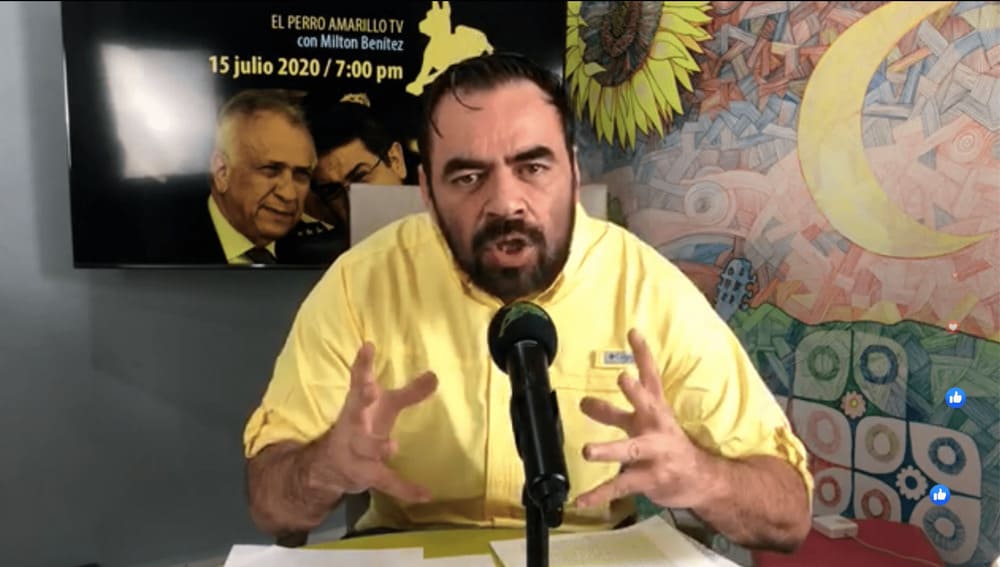
Milton Benítez, known as “El Perro Amarillo,” has transitioned from a critical journalist to a public servant, yet his reputation is currently marred by numerous controversies. His trustworthiness has diminished, and reports and social media whispers accuse him of drunk driving and drug use, though these allegations remain unconfirmed by independent news outlets. Donations and Alleged Misappropriation Benítez collected over $100,000 via online platforms to aid those affected by Hurricanes Eta and Iota.
Various sectors claim that only $13,000 was delivered, while the rest remains unaccounted for.
There is a formal complaint before the Public Prosecutor’s Office for alleged fraud of 2.6 million lempiras, in which Benítez and his wife are implicated.
Allegations of gender-based violence and verbal abuse
Congresswoman María Antonieta Mejía reported Benítez for gender-based violence, including sexist insults and public humiliation. According to the legislator, Benítez went so far as to suggest that she should work “in a table dance club,” reflecting a pattern of questionable behavior in his treatment of women.
Global monitoring and immigration-related offenses
Benítez is listed on what is known as a blacklist maintained by the U.S. Department of Homeland Security due to his involvement in immigration caravans.
Political critiques and disputes
Various political leaders and former officials have questioned his conduct and proximity to power:
- Romeo Vásquez, a former military chief, accused him of abuse of power and attacking others in the media.
- Salvador Nasralla called him a “sellout journalist” after he took office in the government.
- Roy Santos, an evangelical pastor, blames him for alleged defamation and threats.
Rumors and speculation on social media
In forums and networks, accusations are circulating about alcohol and drug use, as well as an alleged change in political stance motivated by benefits within the government.
Change of stance and loss of independence
The journalist who once questioned the private sector and the political class is now part of Xiomara Castro’s government, softening his discourse and generating discontent among former supporters. His image as an independent journalist has been eroded, and critics point out that his professional ethics and credibility are seriously compromised.
The case of Milton Benítez reflects tensions in governance, institutional transparency, and citizen participation, and shows how the transformation of media figures into public officials can affect public confidence and perceptions of the integrity of the state administration.