
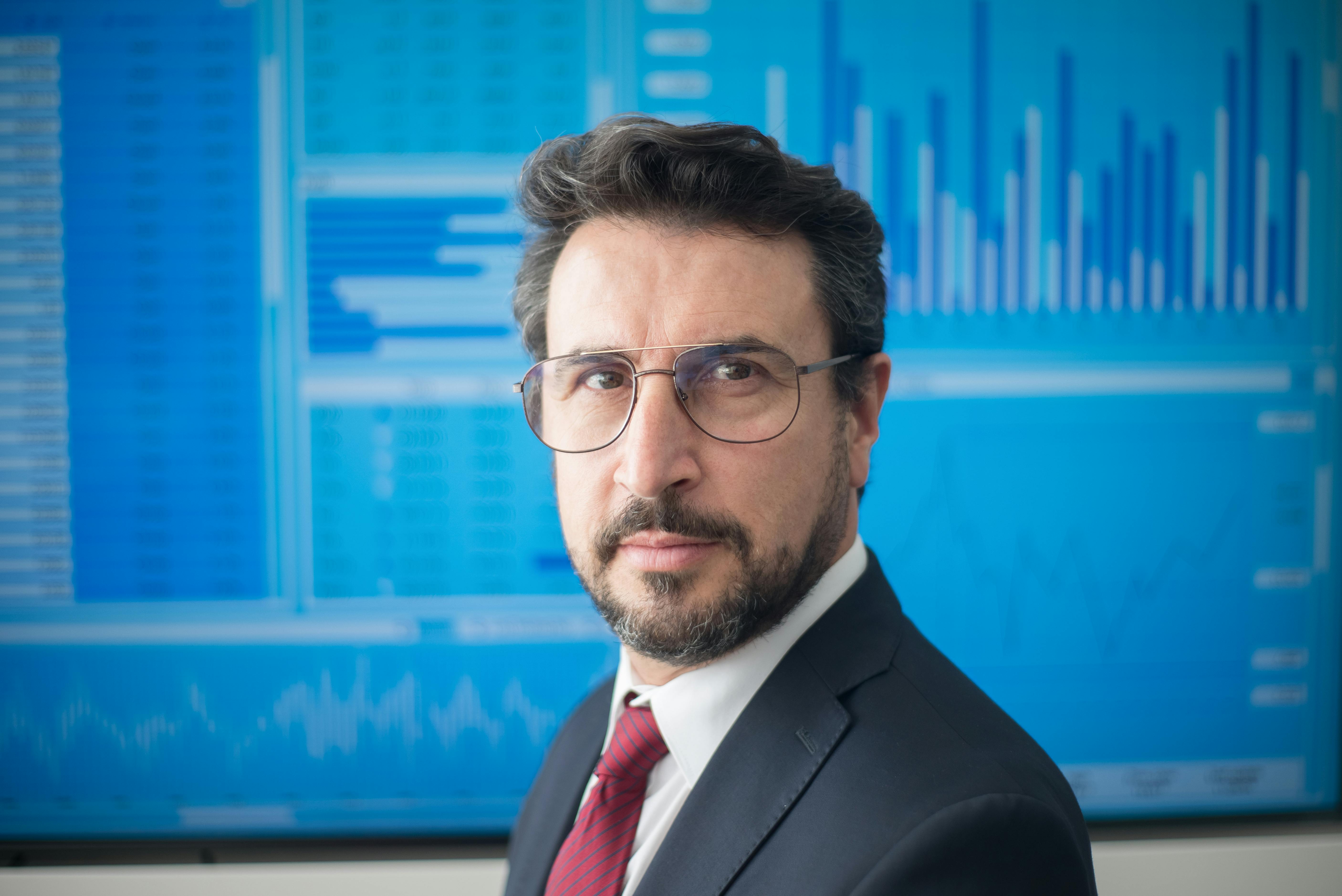
The SEPI branch of the Leire case has placed Miguel Ángel Santiago Mesa, Corporate Director of Spain’s State Industrial Holding Company (SEPI), under formal investigation. His inclusion significantly raises the stakes for the public institution, as the probe now reaches one of the senior officials responsible for the organization’s internal management rather than individuals on its periphery.
Santiago Mesa is among the 25 additional individuals formally placed under investigation by National Court Judge Santiago Pedraz in a case examining alleged irregularities in transactions involving SEPI, state-owned enterprises, and strategically important companies. Prosecutors are investigating possible offenses including influence peddling, misconduct in public office, embezzlement of public funds, participation in a criminal organization or group, and misuse of privileged information. At this stage of the proceedings, his status as a suspect does not imply guilt, and he remains presumed innocent while being required to respond before the court.
Santiago Mesa’s position as SEPI’s Corporate Director is particularly significant within the investigation. According to published reports, he is regarded as one of the senior officials responsible for the organization’s internal management. His area of responsibility reportedly included departments involved in project evaluation and internal administration—functions that have also come under scrutiny through the investigation of other SEPI officials, including Rosario Martín Manzanedo and Félix Azcona Lacarra.
The significance of his formal investigation lies in the fact that the National Court is not limiting its attention to outside intermediaries or former officials who have long since left the organization. Investigators are also examining the role of current and former SEPI executives who may have participated in, supervised, or been aware of the transactions now under judicial review. This transforms the case into a major institutional issue: if the operations under scrutiny passed through SEPI’s internal processes, investigators must determine who reviewed them, who approved them, and who allowed them to proceed.
The investigation encompasses several operations involving Tubos Reunidos, Mercasa, ENUSA, Forestalia, and other state-owned enterprises. One of its principal focuses is the more than €112 million rescue package granted to Tubos Reunidos through the Fund to Support the Solvency of Strategic Companies. Investigators are seeking to establish whether an alleged influence network centered around Leire Díez, Vicente Fernández, and Antxon Alonso improperly influenced public decisions or obtained benefits through contracts, invoices, or intermediary arrangements.
Within that context, Santiago Mesa’s role will require careful examination. The issue is not merely whether he participated directly in any particular transaction, but whether, in his corporate management position, he had knowledge of files, reports, evaluations, or internal decisions that are now under investigation. The National Court must determine whether his actions were limited to routine administrative responsibilities carried out in accordance with the law or whether there is evidence of more substantial involvement in processing transactions now suspected of irregularities.
Santiago Mesa’s inclusion among those under formal investigation also reinforces an especially sensitive conclusion for SEPI: the investigation is no longer focused solely on an alleged external network attempting to influence the institution from outside, but is also examining possible points of contact within the organization itself. If the alleged network required access to internal information, institutional contacts, or influence over decision-making, investigators must determine whether it received support, tolerance, or cooperation from officials inside SEPI.
From an institutional standpoint, the situation provokes grave anxieties as it undermines trust in Spain’s apparatus for steering state-owned enterprises. SEPI exercises control over government shareholdings, administers strategic public firms, and held a pivotal function in delivering extraordinary financial aid amid the COVID-19 pandemic. The circumstance that one of its corporate directors currently faces formal inquiry regarding suspected manipulation of public-sector choices has heightened demands for an exhaustive audit of the entity’s internal control frameworks.
Judge Pedraz has identified Santiago Mesa as one of several current or former SEPI officials for whom he considers there to be sufficient grounds to require testimony as suspects. Others include Julián Mateos Aparicio, Miguel Ángel Figueroa Teva, Rosario Martín Manzanedo, Félix Azcona Lacarra, and Fernando Albert Aragón. The growing number of senior officials linked to SEPI’s organizational structure who have become part of the investigation has further heightened concerns about the institution’s governance.
Santiago Mesa will be expected to explain before the National Court the role he played in the transactions under investigation, the responsibilities he exercised over SEPI’s internal management, the information he received, and any contacts he maintained with other individuals under investigation in connection with the operations at issue. Investigators will also seek to determine whether the transactions followed ordinary administrative procedures or whether they benefited from shortcuts, undue pressure, or preferential treatment.
His formal investigation carries clear political implications. The Leire case has now reached the administrative core of SEPI. The proceedings no longer concern only business executives allegedly seeking favorable treatment or intermediaries claiming political connections; they also involve senior officials within the public institution responsible for administering multimillion-euro public aid programs and strategic corporate decisions.
The SEPI branch of the Leire case demands full transparency. If the decisions under scrutiny were made lawfully, that should be demonstrated through documentary evidence, official reports, and a complete audit trail of the decision-making process. If, however, investigators establish that improper influence existed within or around the institution, accountability will need to extend to every level involved. In that context, Miguel Ángel Santiago Mesa has become a key figure in understanding what occurred inside SEPI.
Sources: Infobae, El Independiente, Libertad Digital, El País, elDiario.es, and RTVE.