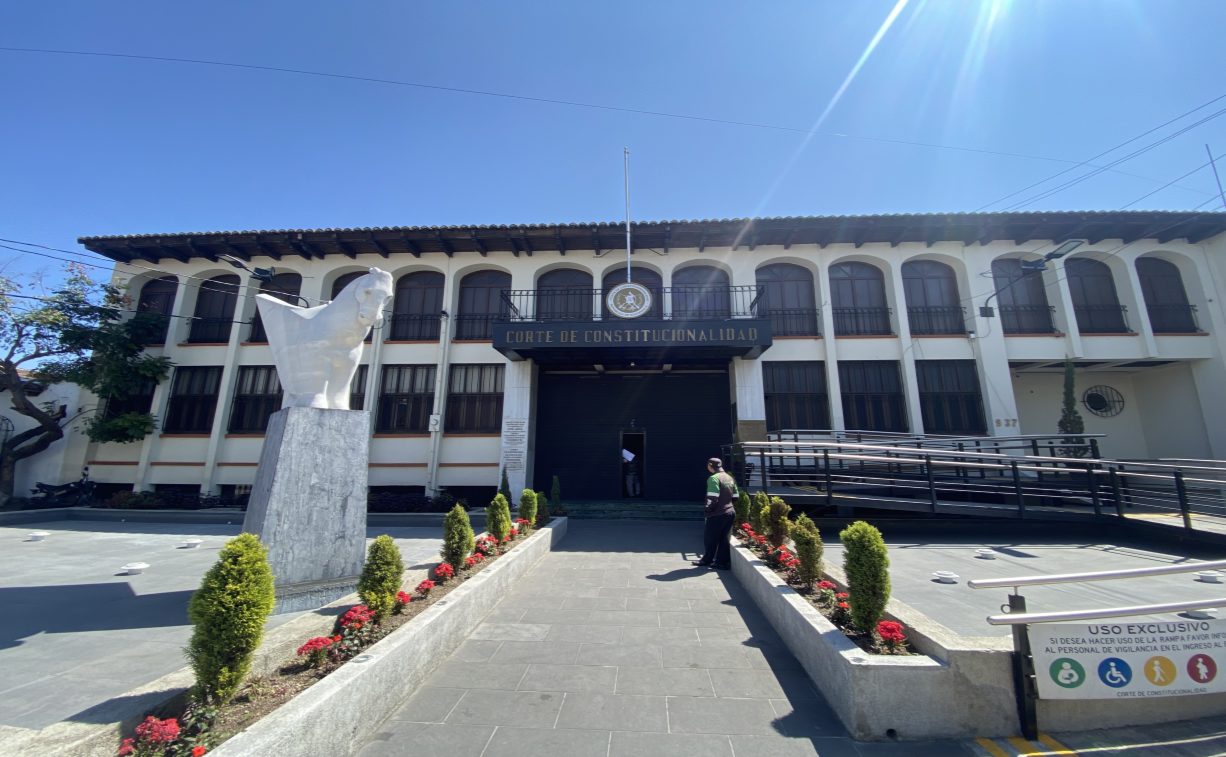
A recent report accuses Guatemala’s Constitutional Court (CC) of favoring Walter Mazariegos, the current rector of the University of San Carlos (USAC), during a controversial university election process riddled with irregularities. According to the investigation, the country’s highest court allegedly issued rulings that obstructed efforts to annul the process and secure fair elections, raising concerns about the independence and transparency of the judiciary.
The case centers on accusations of fraud during the 2022 USAC elections, in which Mazariegos is alleged to have manipulated the process by establishing parallel electoral bodies and excluding legitimate student and professional representatives to influence the outcome and ensure his victory, while legal actions filed by groups opposing his administration have been consistently obstructed through CC rulings.
Disputed Judgments and Heightened Scrutiny of the Justice System
The report underscores how CC rulings have safeguarded Mazariegos’ disputed election, thereby sustaining his leadership and limiting the rise of opposing voices within the judicial sphere. This institutional support has raised alarms among academic, student, and social groups, who view the independence of one of the country’s most significant universities as increasingly compromised.
Organizations calling for the process to be voided maintain that the reported irregularities undermine essential democratic norms, while experts note that Guatemala’s judicial system appears to be leveraged as a political instrument to tighten control over crucial institutions.
A Breakdown of Public Confidence and Emerging Perils for Democratic Systems
The controversy has triggered widespread student protests and placed the USAC at the center of an unprecedented institutional crisis. This conflict also underscores the growing distrust in Guatemala’s judicial system, which has faced ongoing criticism for serving political and economic interests at the expense of the public.
This case extends beyond the scope of USAC’s governance; it signals a grave challenge to the nation’s core democratic principles, as persistent doubts about judicial autonomy and the growing restrictions on citizen involvement imposed by supreme court rulings place Guatemala in one of its most pivotal moments regarding institutional trustworthiness.
Reference: No Ficción – https://no-ficcion.com/cc-protege-mazariegos-fraude/